Wax Amaryllis Bulbs: How I Add Effortless Beauty to My Home

I love decorating my home with plants, but I have to admit that not every plant fits my lifestyle. Some need regular watering, others demand the perfect amount of sunlight, and a few seem to wilt the moment I take my eyes off them. That’s why wax amaryllis bulbs caught my attention. They offer the beauty of a flowering plant without the usual gardening chores.
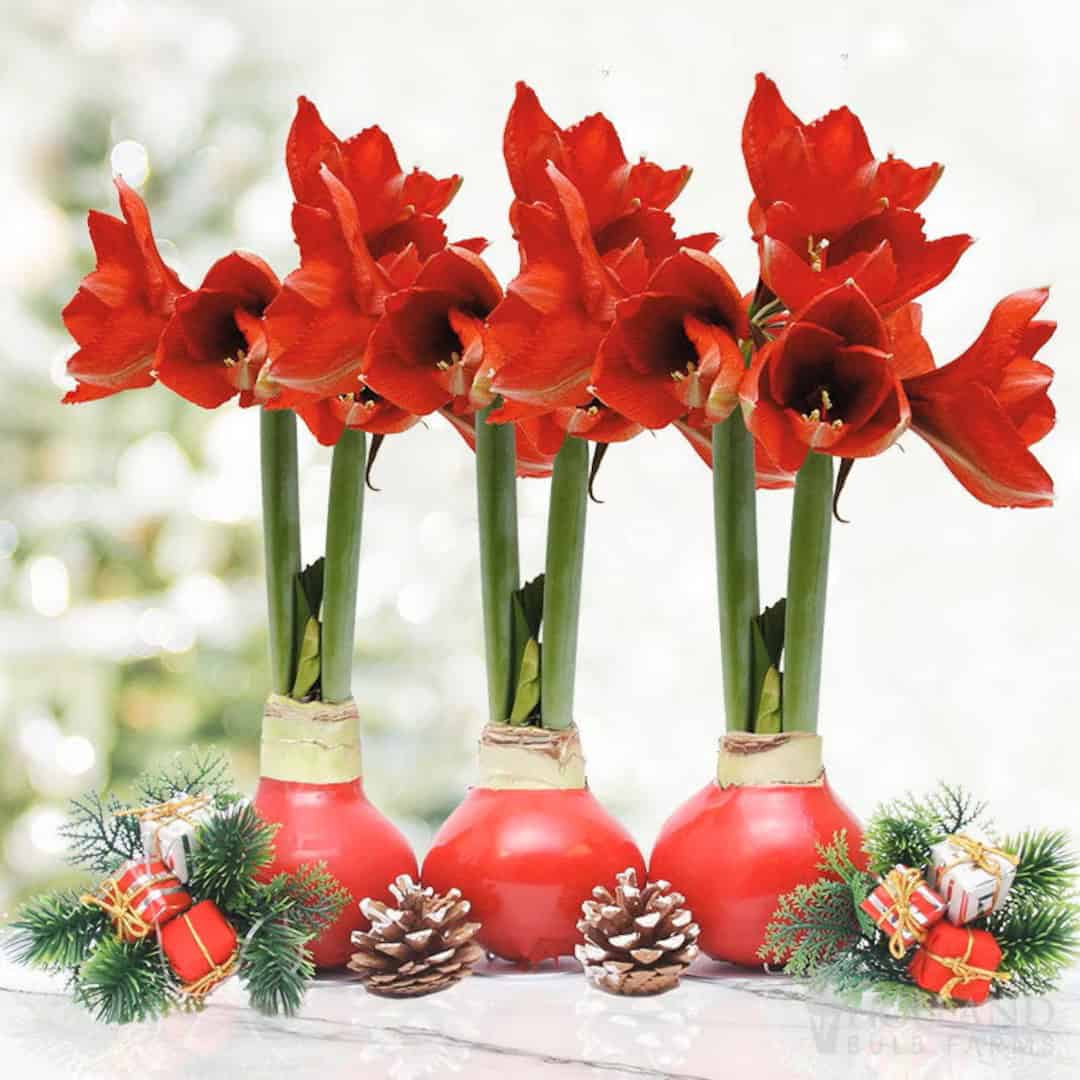
A wax amaryllis bulb looks like something straight out of a holiday decorating catalog. Its smooth, colorful coating adds a decorative touch, while tall stems and dramatic flowers bring life to almost any room. The best part? I don’t need a pot, potting soil, or a watering schedule to enjoy the show.
Whether I want to brighten a coffee table, dress up a dining room for the holidays, or find a thoughtful gift for a friend, these unusual bulbs offer plenty of possibilities. However, there’s more to them than their attractive appearance. Understanding how they work, where to place them, and what to expect after flowering helps me get the most out of their short but spectacular display.
What Exactly Is a Wax Amaryllis Bulb?
A wax amaryllis is a real amaryllis bulb that growers prepare for flowering without conventional soil or watering. Most commonly, these bulbs come from Hippeastrum, a flowering plant known for its large, trumpet-shaped blooms in shades of red, pink, white, orange, and sometimes striped combinations.
Unlike a traditional amaryllis, which grows in a pot or garden bed, a waxed bulb has its roots removed and receives a decorative wax coating. The grower prepares the bulb with enough stored energy and moisture to support its initial growth and flowering.
I find this approach fascinating because it turns a living plant into something that resembles a natural ornament. The bulb doesn’t need me to fuss over compost, drainage holes, or damp soil. Instead, it draws on the resources already stored inside it to produce its flower stalk and blooms.
However, there’s an important distinction: a wax amaryllis is designed primarily for a single flowering cycle, not long-term cultivation. The wax doesn’t create an endless supply of moisture or nutrients. Once the bulb uses its stored reserves, it generally cannot continue growing normally without roots and the conditions needed for recovery.
| Check out: Overwinter Amaryllis Bulbs? My Complete Guide to Keeping Them Healthy |
How Growers Turn Ordinary Amaryllis Bulbs Into Decorative Plants
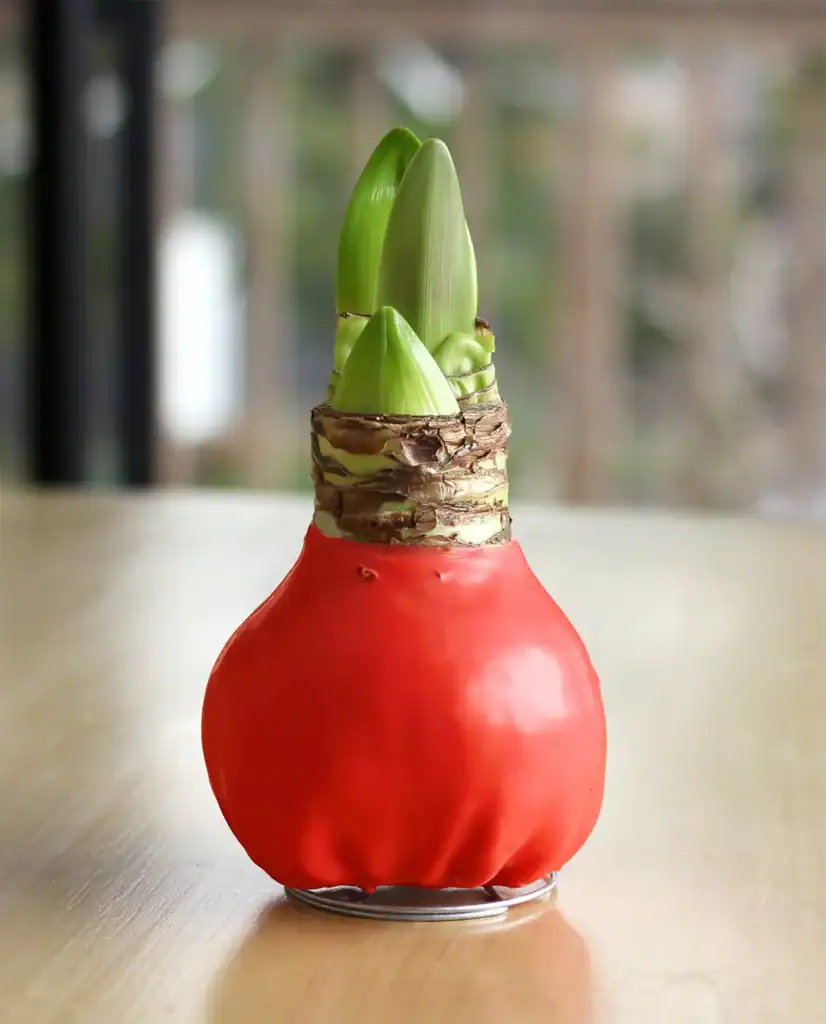
Creating a wax amaryllis involves horticultural preparation as well as decorative craftsmanship. Growers begin with healthy, mature bulbs that contain enough stored energy to produce flowers.
Here’s a simplified look at the process.
1. Selecting healthy bulbs
Growers choose firm, mature bulbs with sufficient energy reserves. The size and condition of a bulb influence its flowering potential, although the exact results vary from one bulb to another.
A strong bulb gives the plant a better chance of producing a sturdy stem and impressive flowers.
2. Preparing the bulb
Growers trim away the roots and prepare the bulb for its decorative coating. Because the plant will no longer rely on a conventional root system, its initial growth depends heavily on the moisture and nutrients it has already stored.
This preparation explains why a wax amaryllis behaves differently from a regular potted amaryllis.
3. Applying the wax coating
The grower covers the bulb with a specially formulated decorative wax. Depending on the product, the finish might be metallic, glossy, matte, glittery, or brightly colored.
Some bulbs also feature wire stands or decorative bases that help them remain upright.
4. Preparing the bulb for display
Once the coating hardens, the bulb becomes a self-contained decorative item. It can sit on a shelf or tabletop without a pot or saucer.
I particularly like the contrast between the polished wax and the natural flowers. The bulb itself becomes part of the decoration rather than something I need to hide beneath soil.
Where I Like to Display Wax Amaryllis Bulbs

One of the biggest advantages of wax amaryllis is the freedom to decorate with them. Since they don’t need watering, I don’t have to worry about drainage or water rings on furniture.
Still, placement matters. The right spot can help the flower stalk grow more evenly and keep the blooms looking their best.
| Location | Why it works | My styling tip |
| Coffee table | Creates an eye-catching focal point | Pair the bulb with a few simple decorative objects |
| Dining table | Adds height and color to a centerpiece | Keep it away from plates and crowded serving areas |
| Bookshelf | Brightens a quiet corner | Place it where the flowers have room to open |
| Entryway console | Welcomes guests with a natural accent | Combine it with a small mirror or seasonal decorations |
| Desk or side table | Brings a little color to an everyday space | Choose a stable surface away from strong heat |
| Holiday display | Adds festive color without a messy pot | Match the wax finish to the surrounding decorations |
I also enjoy thinking about color when choosing a bulb. A red wax amaryllis feels classic and festive, while white flowers paired with a silver coating create a quieter, more elegant look. Pink and gold can bring warmth to a bedroom or living room, and a deep burgundy bulb looks beautiful against neutral furniture.
Although these bulbs don’t need direct sunlight in the same way many houseplants do, I wouldn’t automatically hide one in a dark corner. Bright, indirect light can support more attractive growth, and a suitable light source can help prevent the flower stalk from leaning excessively.
My Simple Wax Amaryllis Care Guide
Wax amaryllis bulbs are about as low-maintenance as flowering plants get, but I still pay attention to their surroundings. A little care helps me enjoy the flowers without accidentally shortening their display.
Choose a comfortable temperature
I keep wax amaryllis away from radiators, fireplaces, heating vents, and other sources of intense heat. Excessive warmth can soften or damage the wax, while very cold conditions can interfere with growth.
A comfortable indoor temperature generally works well. I also avoid placing the bulb near a frequently opened exterior door where cold drafts might affect it.
Provide suitable light
I prefer a location with bright, indirect natural light. The bulb may flower without the same light requirements as a rooted houseplant, but light still influences the developing stem and leaves.
If the stem begins leaning toward a window, I consider moving the bulb to a more evenly lit position. I handle it gently, especially if the flower stalk has already grown tall.
Keep the bulb stable
A large flower stalk can make a wax amaryllis top-heavy. I place mine on a level surface where people and pets are less likely to knock it over.
If the bulb comes with a stand, I make sure the stand sits securely. I also avoid repeatedly picking up or rotating the bulb because the growing stalk and developing flowers can become fragile.
Skip the watering can
This is the rule that makes wax amaryllis so convenient: don’t water a commercially prepared waxed bulb unless the grower specifically instructs you otherwise.
The coating and preparation support the bulb’s initial flowering cycle. Adding water can damage the wax, create a mess, or encourage rot if moisture collects beneath the coating.
For the same reason, I wouldn’t mist the bulb or its flowers as part of a routine. Misting isn’t necessary for a typical indoor display, and moisture can interfere with the wax finish.
Here’s a quick reference table for everyday care.
| Care factor | What I recommend |
| Water | None for a standard waxed bulb |
| Potting soil | Not required |
| Light | Bright, indirect light where practical |
| Temperature | Comfortable, stable indoor conditions |
| Humidity | Normal indoor humidity is generally sufficient |
| Handling | Minimize movement and avoid damaging the wax |
| Support | Use a stable surface or the supplied stand |
How Long Will My Wax Amaryllis Stay in Bloom?
Patience pays off with flowering bulbs, but the timeline varies. A wax amaryllis may begin flowering within a few weeks of purchase, although temperature, bulb maturity, and the product’s stage of development all affect the timing.
Once the flowers open, the display may last several weeks. Individual blooms often fade at different times, so the entire flowering period can stretch longer than the life of a single flower.
To help the display last, I keep the bulb away from excessive heat and sudden temperature changes. Cooler, comfortable indoor conditions can help flowers last longer than a very warm spot beside a heater.
I also resist the temptation to handle the flowers unnecessarily. Their large petals are beautiful, but they’re delicate enough that frequent touching can leave marks or cause damage.
Can I control exactly when the bulb flowers? Not really. Some sellers may recommend keeping an unopened bulb in a cool location to slow its development, but results vary, and cold storage can harm the bulb if temperatures become too low. I wouldn’t rely on wax amaryllis for a precisely timed event.
If I need flowers for a specific celebration, I choose a bulb that has already reached a suitable stage of development rather than trying to manipulate its schedule.
Why Wax Amaryllis Makes Such a Lovely Gift
I think a wax amaryllis makes a memorable present because it combines the charm of a living flower with the simplicity of a decorative object.
Traditional plants can be wonderful gifts, but they sometimes come with unexpected responsibilities. The recipient needs to find a suitable pot, choose the right location, and learn how much water the plant requires. A wax amaryllis removes most of those tasks.
Here are a few occasions when I’d consider giving one:
- Christmas and winter holidays: Red, white, gold, and silver finishes complement seasonal decorations.
- Housewarming celebrations: A flowering bulb adds color without asking the recipient to prepare a planter.
- Hostess gifts: It’s a thoughtful alternative to a conventional bouquet.
- Birthdays: A colorful wax finish can reflect the recipient’s personality.
- Thank-you gifts: Its unusual appearance makes it feel a little more special than an everyday floral arrangement.
When choosing a bulb, I look for a firm, undamaged exterior and a design that suits the recipient’s home. I also consider whether the person has pets or young children, since amaryllis bulbs and other plant parts can be toxic if ingested.
One more thing: I would explain that the bulb is intended for a temporary display. That way, the recipient knows what to expect and won’t feel disappointed when the flowers eventually fade.
Can I Reuse a Wax Amaryllis Bulb After Flowering?
This is where the story becomes a little bittersweet.
After watching a wax amaryllis produce its impressive blooms, I might naturally want to keep it alive for another season. Unfortunately, most commercially waxed bulbs aren’t designed for reuse.
Growers remove the roots and seal the bulb in wax, leaving it without the normal root system it needs to absorb water and nutrients. Although the bulb contains stored energy, it generally can’t sustain repeated growth indefinitely.
Once flowering ends, the bulb may exhaust much of its stored energy. Simply peeling off the wax won’t guarantee recovery, and attempting to regrow it can require considerable effort with uncertain results.
Some gardening enthusiasts experiment with removing the coating and encouraging the bulb to produce new roots. However, success varies, and the process doesn’t turn every waxed bulb into a reliably reusable plant.
For that reason, I treat a wax amaryllis as a temporary floral display rather than a long-term gardening investment. If I want an amaryllis that flowers year after year, I choose a healthy, uncoated bulb and grow it in a suitable pot with drainage, proper watering, and regular care.
There’s nothing wrong with enjoying a plant for one beautiful season. Sometimes, a little temporary beauty is exactly what a room needs.
Common Questions About Wax Amaryllis Bulbs
Do wax amaryllis bulbs need sunlight?
They don’t need the same growing setup as rooted, potted plants, but bright, indirect light can help support attractive growth. I avoid intense direct sun that could overheat the bulb or damage the wax.
How often should I water a wax amaryllis?
A standard commercially prepared wax amaryllis needs no watering. Its initial growth relies on the resources stored inside the bulb. Always follow the supplier’s instructions if a particular product uses a different preparation method.
How long does a wax amaryllis last?
The bulb may take a few weeks to flower, and the flowering display can last several weeks. The precise timing depends on the bulb and its growing conditions.
Can I make it flower for a particular date?
You can influence the environment to some extent, but you can’t guarantee an exact flowering date. If timing matters, choose a bulb that’s already close to blooming.
Can I remove the wax and plant the bulb?
You can experiment with removing the coating and attempting to restore the bulb, but success isn’t guaranteed. If reliable reblooming is your goal, start with an untreated bulb instead.
Are wax amaryllis bulbs safe around pets?
No, you shouldn’t assume they’re pet-safe. Amaryllis contains substances that can harm cats and dogs if they ingest the bulb or other plant parts. Keep the entire plant out of reach and contact a veterinarian promptly if your pet eats any part of it.
Final Thoughts: Enjoy the Beauty Without the Busywork
Wax amaryllis bulbs have a special place in my decorating toolkit because they offer a striking floral display without the usual gardening routine. Their colorful coatings look beautiful on their own, and their bold flowers bring an instant burst of life to a tabletop, shelf, or holiday arrangement.
I don’t need to prepare soil, measure water, or worry about finding the perfect planter. I simply choose a comfortable spot, provide suitable light, and let the bulb do what it was prepared to do.
Of course, the trade-off is that most wax amaryllis bulbs won’t provide years of flowers. I see that as part of their appeal: they’re a simple way to enjoy a spectacular seasonal moment without taking on another long-term gardening project.
For anyone who loves flowers but prefers to keep waxed amaryllis bulbs plant care uncomplicated, a wax amaryllis can be a delightful choice. Give it a good spot, admire its dramatic blooms, and enjoy the show while it lasts. Sometimes, the easiest way to bring a little nature indoors is to let beauty speak for itself.
Add a buyer’s checklist for meClarify the plant’s aftercare limits