Grow a Stunning Abies Concolor ‘Blue Cloak’ (Blue Cloak White Fir): Simple Care Tips for Beginners

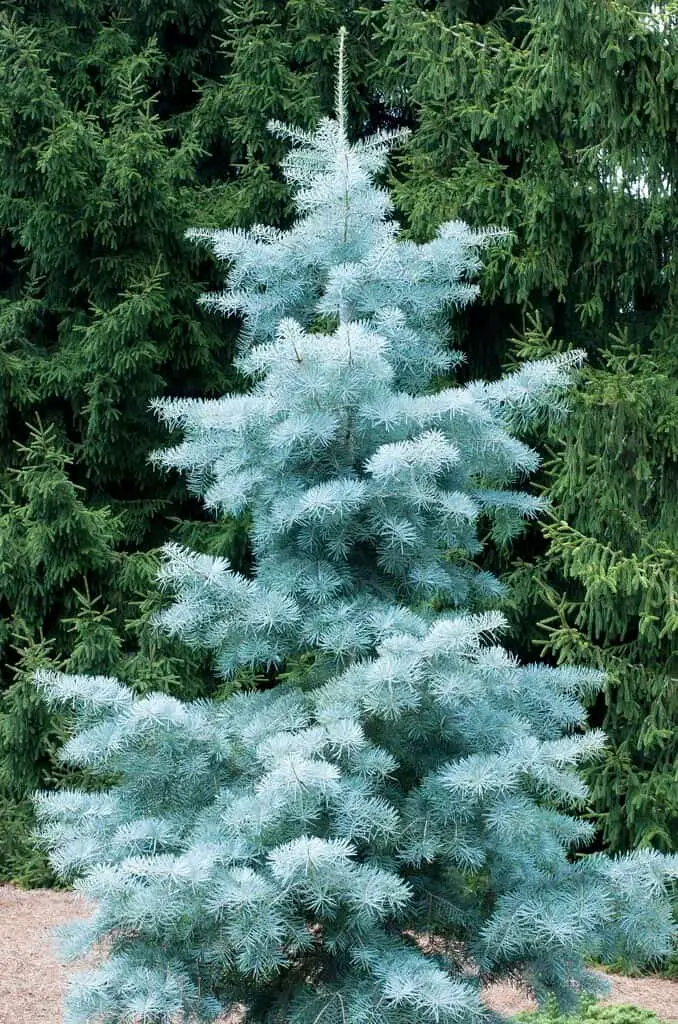
The Blue Cloak White Fir, otherwise known as the Abies Concolor ‘Blue Cloak’ or White Fir ‘Archer’s Dwarf’, Archer’s Dwarf White Fir, is a rather well known tree plant by gardening enthusiasts around the world.
Best known for its low maintenance and slow growth, this tree will likely liven up your house (or garden) with its silver-blue colored leaves. But, only if you learn how to take proper care of it for it to thrive.
Fortunately, this is exactly what we’ll cover in this Blue Cloak White Fir Care Guide. So let’s dive in.
The fundamental caring guidelines for every Blue Cloak White Fir can be summed up into the following:
- Water: The Blue Cloak White Fir needs soil that is constantly moist through regular watering.
- Light: Keep your Abies Concolor ‘Blue Cloak’ in an environment where it can receive full sun on a daily basis.
- Soil: Make sure to keep the Blue Cloak White Fir in soil with moist but well-draining properties, so ideally, one that is made of sand, loam, and clay.
And that’s practically it! If you keep these three factors in check, your Blue Cloak White Fir will likely have all it needs for it to survive and even thrive.
Scientific / Botanical Aspects
In botanical terms, the Blue Cloak White Fir belongs to the Pinaceae family, the genus Abies and the species Concolor, hence its scientific (or botanical) name Abies Concolor ‘Blue Cloak’ (A-beez KON-kol-or).
Other popular Pinaceae plants include other species like Dwarf Balsam Fir, Pieris Japonica ‘Purity’, Pinus Mugo ‘Sherwood Compact’, Shore Pine, Subalpine Fir ‘Green Globe’, Dwarf Norway Spruce, Pinus Flexilis ‘Vanderwolf’S Pyramid’
As with other Abies’s, the Blue Cloak White Fir is an evergreen plant, which means it will be present year round in your garden.
Growing Region
The Blue Cloak White Fir is a plant native to Western North America.
Knowing your plant’s native region is very useful, as it can give you tips on which environment is best for your Blue Cloak White Fir. If you keep it in mind, you can try to replicate these conditions at home, and you’ll likely end with a healthier plant.
With this in mind, the Abies Concolor ‘Blue Cloak’ will be most used to the heat zones in the 1 – 7 region, as the plant hardiness level falls between 3a, 3b, 4b, 4a, 5a, 5b, 6a, 6b, 7b, 7a and the ideal climate zone is between 2, 2A, 2B, 3, 3A, 3B, 4, 5, 6, 7, 8, 9, 14, 15, 16, 17, 18, 19, 20, 21, 22, 23, 24, A2, A3.
Growth and Size
The Blue Cloak White Fir (Abies concolor ‘Blue Cloak’) is known for its slow, steady growth, making it a manageable choice for gardeners of all experience levels. Its gradual pace allows you to shape your landscape without worrying about rapid overgrowth.
In terms of size, this ornamental evergreen reaches a moderate height and width, making it ideal for structured garden spaces.
| Growth Feature | Measurement |
| Height | 3–6 ft (90–180 cm) |
| Width | 2–3 ft (60–90 cm) |
| Spacing | 40 in (100 cm) |
| Growth Rate | Slow |
Its naturally pyramidal shape adds elegance and symmetry to outdoor spaces, making it a strong focal point in landscape design.
Keep in mind:
- Best suited for medium-sized garden areas
- Requires open space for healthy spread
- Excellent for formal or decorative planting
With proper placement, this tree delivers lasting visual appeal and balanced structure.
Water
In terms of watering, the Blue Cloak White Fir is a fairly complicated plant to take care of.
This is mostly because it has a not so straightforward watering schedule and somewhat regular watering needs.
Specifically, most experts agree that the Abies Concolor ‘Blue Cloak’ needs soil that is constantly moist through regular watering.
Which is why it is considered a plant with relatively average needs in terms of water.
Watering
As a rule of thumb, you should remember to keep your Blue Cloak White Fir in soil with moist but well-draining characteristics, as these will guarantee the right conditions for your plant to grow and thrive.
When you consider this, this is why you should aim to choose soil that has good drainage, and moist properties to keep the right moisture levels at all times.
But, if you want a ‘one-size-fits-all’ solution to watering your Blue Cloak White Fir then you should consider the famous ‘finger’ test. To perform this test, you just need to put your finger in your plant’s soil and determine if it’s moist or not. If it is, then don’t water; if it isn’t, then please do. In any case, this test will allow you to know if your Blue Cloak White Fir needs or does not need water, every time.
Soil Mix
As mentioned earlier, the Blue Cloak White Fir prefers to have soil with good drainage, and moist properties at all times, reason why you need to make the soil mix out of sand, loam, and clay.
This is why most experts agree that the Blue Cloak White Fir requires soil with loam (silt), and sand, which will give you the right conditions it needs.
In addition to this, expert gardeners recommend having preferably neutral to acid soil.

Light and Exposure
In terms of light & exposure, the Blue Cloak White Fir requires full sun in order for it to thrive under the right conditions.
Most experts agree that this tree will do well as long as you keep it in partial to full sun, and it will be able to grow properly.
Specifically, we recommend that you place your Abies Concolor ‘Blue Cloak’ in from dappled or moderate shade (under other plant’s canopy), to full and direct sun (more than 6 hours of direct sunlight per day).
Season
As an evergreen conifer, the Blue Cloak White Fir keeps its striking blue-green foliage throughout the entire year. This means your garden benefits from steady color, texture, and structure in every season, even when other plants fade or go dormant.
Its strongest visual performance extends across all seasons, with especially vibrant growth during spring and summer. Still, its beauty remains consistent through fall and winter.
| Season | Garden Presence |
| Spring | Fresh growth and vivid color |
| Summer | Full, healthy foliage |
| Fall | Stable evergreen display |
| Winter | Strong form and year-round interest |
Why gardeners value it:
- Evergreen appearance all year
- Reliable seasonal beauty
- Excellent winter landscape feature
The Blue Cloak White Fir is an ideal choice for anyone seeking lasting elegance and dependable garden appeal, no matter the season.
Flowers
The Blue Cloak White Fir produces some wonderful purple/lavender and red/burgundy flowers around this time of year.
Foliage
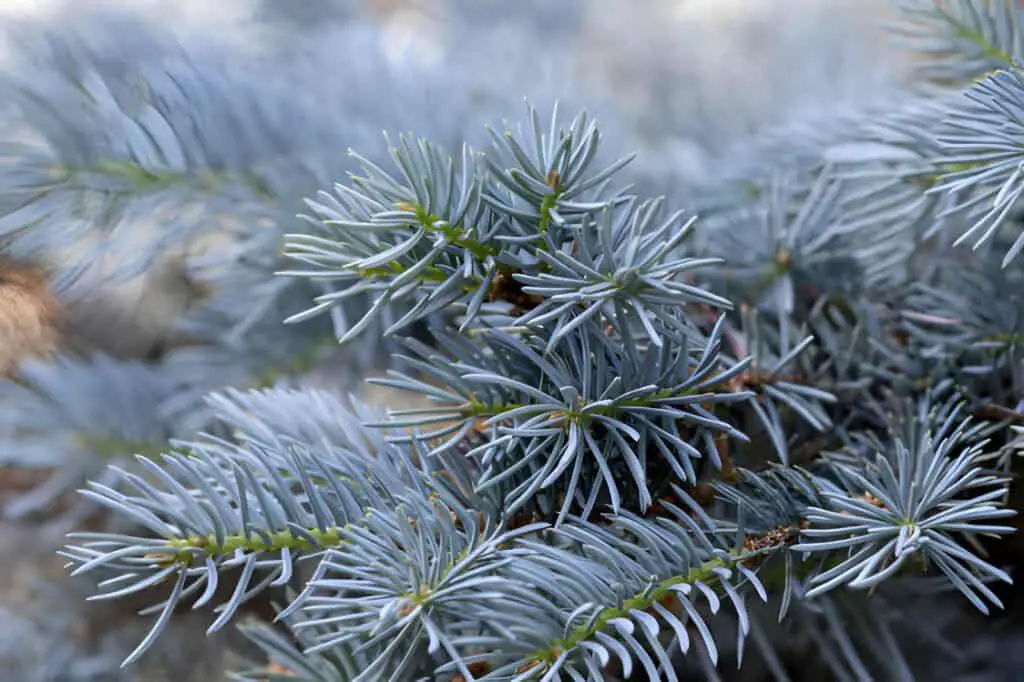
The leaves from the Blue Cloak White Fir have a beautiful silver-blue color during most of the year.
In particular, they have a needles arrangement in its leaves.
You can expect the leaves from your Abies Concolor ‘Blue Cloak’ to be around (1-3 inches) in size.
Attracts, Tolerance and Resistance
The Blue Cloak White Fir is well known for its tolerance to drought and animals like deer, so don’t worry if any of these come along, your Abies Concolor ‘Blue Cloak’ will be fine.
Garden
Now, let’s talk garden and how your Blue Cloak White Fir will look best in it.
Most Abies Concolor ‘Blue Cloak’ owners agree that this tree will look great in most rustic gardens of all types.
Other owners consider that they complement well most gardens of informal and cottage, city and courtyard, gravel and rock garden, and in traditional garden styles.
In particular, the Blue Cloak White Fir’s best location within your garden is in beds and borders, and in patio and containers, others use it for landscaping in a specimen, privacy screen, rock garden, or a woodland garden.
Conclusion
So that’s it! These are the main plant care requirements that you need to keep in mind in order to have a healthy Blue Cloak White Fir in your garden or home.