The Complete Guide to Growing Shore Pine (Pinus Contorta Var. Contorta) Without Losing Your Mind

I’ll be honest — the first time I planted a Shore Pine, I treated it like every other ornamental tree in my yard. Big mistake.
I babied it with extra water, fussed over the soil, and hovered around it like a helicopter parent. Meanwhile, the tree looked at me like, “Relax, I’ve survived coastal storms tougher than your garden hose.”
That’s the thing about the Shore Pine. This tree doesn’t need constant pampering. It thrives when you give it the right foundation and then let it do its thing. Once I understood that, everything clicked.
If you’re thinking about adding a Shore Pine to your landscape, you’re in for a rugged, low-maintenance evergreen that can handle wind, salt, drought, and even nosy deer nibbling around the yard. It’s the kind of tree that rolls up its sleeves and gets to work without asking for much in return.
Let me walk you through everything I’ve learned about growing and caring for this hardy coastal beauty.
Meet the Shore Pine
The Shore Pine, scientifically known as Pinus Contorta Var. Contorta, belongs to the Pinaceae family. It’s closely related to lodgepole pines and other evergreen conifers gardeners love for year-round color and structure.
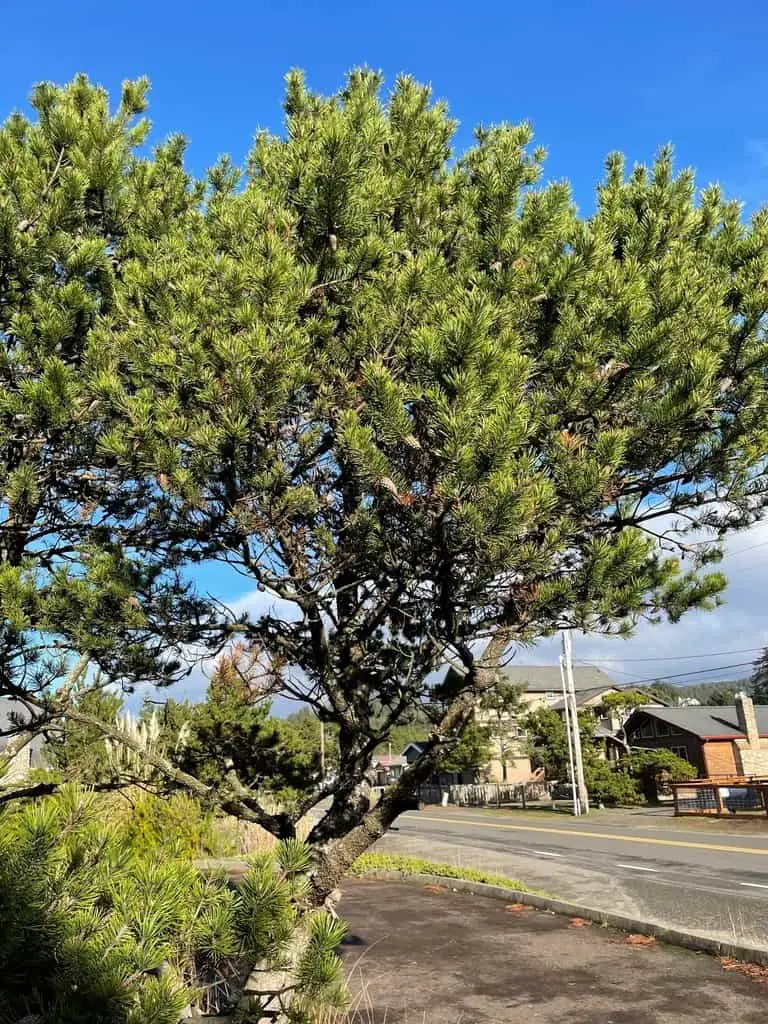
What grabbed my attention immediately was its rugged personality. Some trees look delicate and refined. The Shore Pine looks like it has stories to tell. Windswept branches, twisted trunks, dense green needles — it carries the charm of a tree that grew up fighting ocean winds.
Despite its rough-and-tumble appearance, it fits beautifully into modern landscapes, Japanese gardens, cottage gardens, and coastal designs.
Here’s a quick snapshot of the plant:
| Feature | Details |
| Botanical Name | Pinus Contorta Var. Contorta |
| Common Name | Shore Pine |
| Plant Type | Evergreen Tree |
| Growth Rate | Fast |
| Mature Height | 35–50 ft |
| Mature Width | 35–50 ft |
| Sun Needs | Full Sun |
| Water Needs | Moderate |
| Soil Type | Sandy, loamy, clay-based, well-draining |
| Special Traits | Salt tolerant, drought tolerant, deer resistant |
Why I Fell in Love With This Tree
Some plants demand center stage. Others quietly anchor the entire garden like the bass player in a rock band.
That’s the Shore Pine.
It doesn’t scream for attention with flashy flowers or dramatic seasonal changes. Instead, it brings consistency. Even in the dead of winter, when most of the garden looks half-asleep, this evergreen keeps the yard alive with rich green needles and bold texture.
I also appreciate how forgiving it is. Miss a watering? It survives. Strong winds? No problem. Salty coastal air? It practically laughs at it.
For gardeners who don’t want high-maintenance divas in the yard, this tree feels like striking gold.
The Secret Sauce: Sunlight
If there’s one thing you shouldn’t skimp on, it’s sunlight.
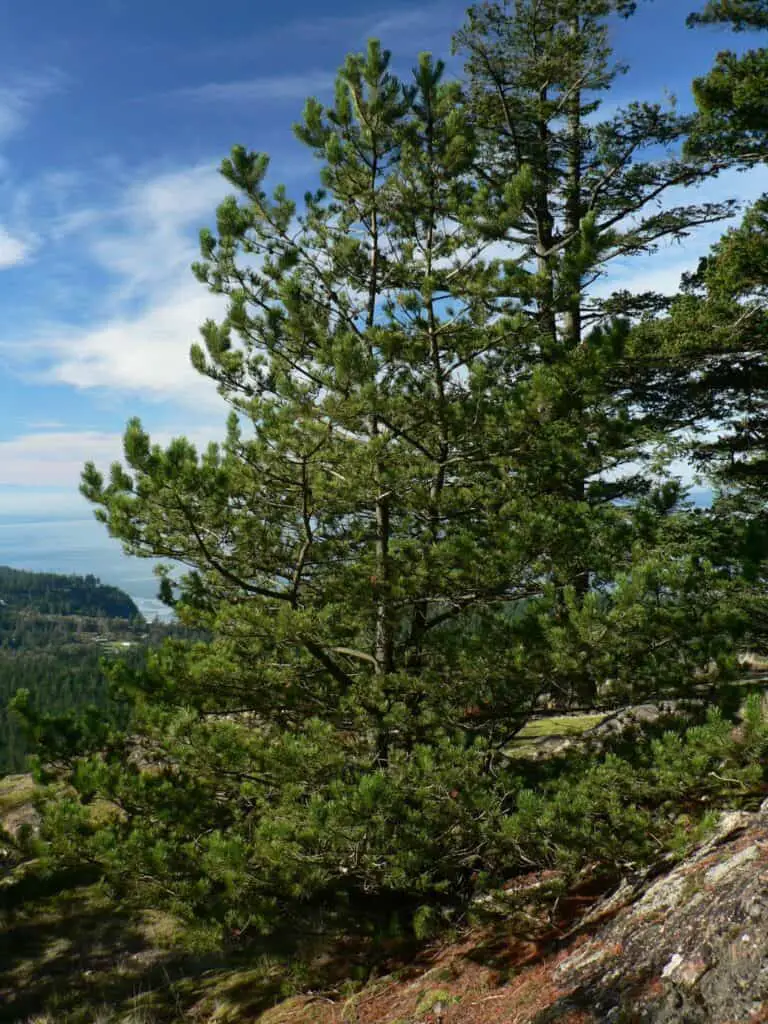
Shore Pines absolutely adore full sun. Mine exploded with healthy growth once I moved it away from partial shade.
Give your tree at least 6 hours of direct sunlight daily. More is even better.
Best Light Conditions
- Full direct sunlight
- Open areas with strong airflow
- Minimal shade from nearby trees
- Spacious planting location
Think of the Shore Pine as a beachgoer chasing sunshine all day long. Tuck it into a dark corner, and it sulks.
Watering: Don’t Drown the Poor Thing
When I first planted mine, I watered it constantly because I assumed “fast-growing” meant “thirsty.”
Wrong move.
Shore Pines prefer consistent but moderate watering. Once established, they tolerate drought surprisingly well.
My Watering Routine
| Season | Watering Frequency |
| Spring | Once per week |
| Summer | 1–2 times weekly during heat |
| Fall | Once per week |
| Winter | Only if soil becomes dry |
The finger test became my best friend.
I stick my finger a couple of inches into the soil:
- If it feels moist, I leave it alone.
- If it feels dry, I water deeply.
Simple. No fancy gadgets needed.
The biggest danger comes from overwatering. Soggy roots spell disaster faster than a toddler with permanent markers on white walls.
Soil Matters More Than People Think
The Shore Pine likes soil that drains well. That’s non-negotiable.
Heavy, waterlogged soil can suffocate the roots and invite fungal issues. I learned this lesson the hard way after planting one in compacted clay that held water like a sponge.
Now I always loosen the planting area and improve drainage beforehand.
Ideal Soil Mix
The best blend usually includes:
- Sand
- Loam
- Clay (in moderation)
- Organic matter for balance
Interestingly, Shore Pines tolerate several soil pH levels:
- Slightly acidic
- Neutral
- Slightly alkaline
They’re not terribly picky, which makes life easier for gardeners.
Growth Rate: Blink and It Gets Bigger
One thing shocked me about this tree — its growth speed.
Young Shore Pines can take off like a rocket under the right conditions. Before you know it, that cute little sapling transforms into a substantial landscape feature.
Mature Size Expectations
| Dimension | Size |
| Height | 35–50 feet |
| Width | 35–50 feet |
That wide spread catches many people off guard.
Do yourself a favor: don’t plant it too close to your house, driveway, or tiny flower beds. Give it room to stretch its arms.
I like to think of Shore Pines as teenagers at an all-you-can-eat buffet — they grow fast and claim space quickly.
| Check out: How to Grow Pinus Sylvestris ‘Glauca Nana’ |
What Makes Shore Pine So Tough?
This tree practically wears combat boots.
It handles conditions that send other ornamental trees into a meltdown.
Shore Pine Tolerances
| Condition | Tolerance Level |
| Salt Spray | Excellent |
| Drought | High |
| Wind | Excellent |
| Deer | Resistant |
| Coastal Exposure | Excellent |
If you live near the ocean, this tree becomes even more valuable. Salt spray destroys many landscape plants, but Shore Pine takes it in stride.
That resilience explains why it naturally thrives in rugged coastal environments.

Foliage and Seasonal Interest
Some evergreens fade into the background. Shore Pine doesn’t.
Its needles stay richly green throughout the year, adding texture and depth to the garden even during colder months.
Needle Characteristics
- Needle-like foliage
- Simple leaf arrangement
- Green year-round
- Around 1–3 inches long
The twisted branches and irregular form give mature specimens tremendous character. No two trees seem identical.
That wild, sculptural appearance reminds me of driftwood shaped by years of ocean wind.
Does Shore Pine Flower?
Technically, yes.
But don’t expect giant blooms like hydrangeas or roses.
The tree produces subtle brown/copper and reddish cone structures that appear during its reproductive cycle. They add texture rather than flashy color.
Honestly, the Shore Pine shines more through its form and evergreen presence than through flowers.
Where Shore Pine Looks Best in the Garden
This tree fits into more garden styles than people realize.
I’ve seen it used beautifully in:
- Coastal landscapes
- Japanese gardens
- Informal cottage gardens
- Rustic woodland settings
- Traditional landscapes
Best Placement Ideas
| Landscape Use | Why It Works |
| Specimen Tree | Dramatic shape and texture |
| Coastal Landscaping | Salt tolerance |
| Beds and Borders | Evergreen structure |
| Windbreak | Strong wind resistance |
| Naturalistic Gardens | Rugged appearance |
Personally, I love using Shore Pine as a focal point. Its irregular growth habit creates a natural, relaxed atmosphere that feels authentic rather than overly manicured.
Companion Plants That Pair Beautifully
Every star player needs a good supporting cast.
Shore Pines pair wonderfully with plants that enjoy similar growing conditions.
My Favorite Companion Plants
Japanese Maple (Acer)
The soft, delicate leaves contrast beautifully against rugged pine needles.
Rhododendron
Their bold flowers create a stunning seasonal combination beside the evergreen backdrop.
Other great companions include:
- Ornamental grasses
- Heather
- Juniper
- Dwarf spruce
- Ferns
The contrast between soft foliage and strong evergreen texture creates visual magic.
Common Mistakes I See Gardeners Make
Even low-maintenance trees can struggle if planted incorrectly.
Here are the biggest mistakes I’ve seen:
1. Overwatering
Too much water causes root problems fast.
2. Planting in Shade
This tree craves sunlight like a solar panel.
3. Poor Drainage
Wet roots and Shore Pines do not mix.
4. Underestimating Mature Size
A tiny sapling eventually becomes a large tree.
5. Overfertilizing
You don’t need to force-feed this plant. Moderate nutrition works best.
Sometimes gardeners kill plants with kindness. Shore Pine thrives when you keep things simple.
My Final Thoughts on Growing Shore Pine
The longer I garden, the more I appreciate plants that pull their weight without demanding constant attention.
The Shore Pine checks that box beautifully.
It survives tough conditions, grows quickly, looks attractive year-round, and brings rugged personality into the landscape. Whether you live near the coast or simply want an easygoing evergreen tree, this pine delivers.
At the end of the day, caring for a Shore Pine boils down to three basics:
- Give it full sun
- Plant it in well-draining soil
- Water consistently but moderately
That’s it.
No endless maintenance checklist. No fussy routines. No drama.
And honestly? In a garden full of prima donnas, that feels refreshing.