Mops Mugo Pine Care: How I Grow and Maintain Pinus mugo ‘Mops’

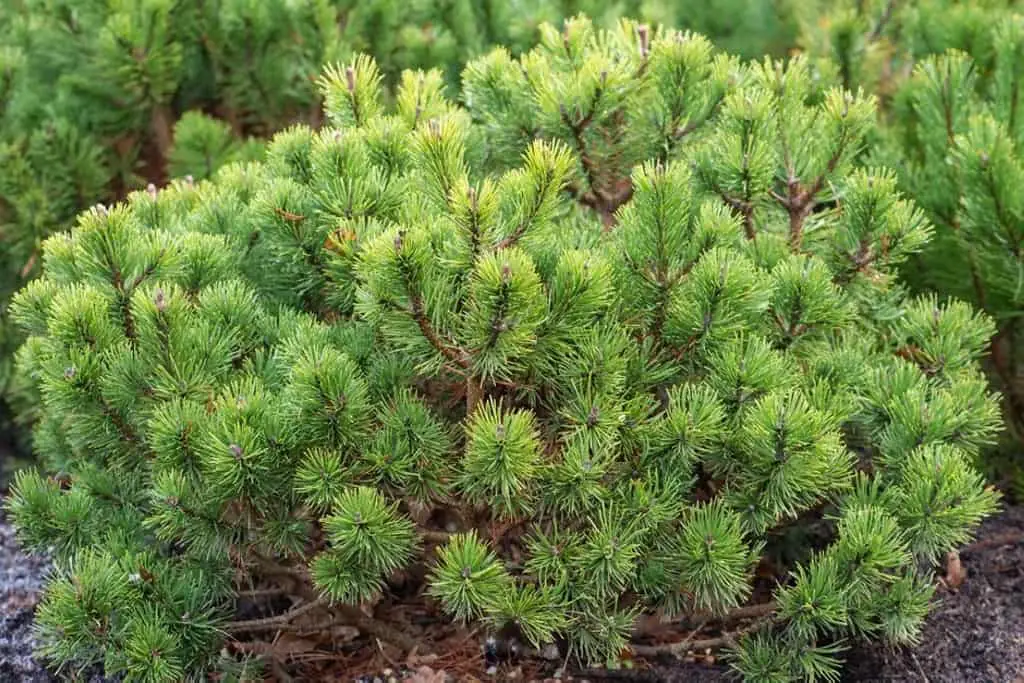
There’s something wonderfully dependable about the Mops Mugo Pine. It doesn’t need to be the tallest tree in the garden or the loudest plant in the landscape to make an impression. Its compact, rounded shape and rich green needles give it a neat presence that works beautifully in rock gardens, borders, containers, and small spaces.
I especially like Pinus mugo ‘Mops’ because it brings the structure of an evergreen without demanding constant attention. Once I give it plenty of sunlight, well-drained soil, and sensible watering, it mostly takes care of itself.
The key word here is compact. Unlike many pines that eventually tower over everything around them, ‘Mops’ stays relatively small and naturally forms a dense, rounded mound. That makes it an excellent choice when I want year-round greenery without creating a future wrestling match with an oversized tree.
Here’s how I approach Mops Mugo Pine care.
Quick Mops Mugo Pine Care Guide
| Care Factor | What I Recommend |
| Botanical name | Pinus mugo ‘Mops’ |
| Common name | Mops Mugo Pine |
| Plant type | Dwarf evergreen conifer |
| Mature size | About 3–4 ft tall and wide |
| Growth rate | Slow |
| Light | Full sun is ideal; partial sun can work |
| Soil | Well-drained, moderately fertile soil |
| Water | Regularly while establishing; drought-tolerant once mature |
| Foliage | Dense green to blue-green needles |
| Hardiness | Generally USDA Zones 2–7 |
| Best uses | Rock gardens, borders, containers, foundation plantings |
| Deer resistance | Generally good |
| Drought tolerance | Good once established |
What Is a Mops Mugo Pine?
The Mops Mugo Pine is a compact cultivar of Pinus mugo, a mountain pine native to mountainous regions of central and southern Europe.
It belongs to the Pinaceae, or pine family, alongside familiar conifers such as spruces, firs, and other pines. As an evergreen, it keeps its foliage throughout the year, which means I can count on it to provide structure even when many neighboring plants have packed their bags for winter.
The cultivar name ‘Mops’ tells an important part of the story. This plant develops a naturally rounded, densely branched habit that looks almost like a green cushion. I don’t need to constantly prune it into shape because its genetics do most of the heavy lifting.
Its needles usually appear in pairs and create a dense texture that gives the shrub plenty of visual weight despite its small stature.
| Check out: Mops Mugo Pine Care: How I Grow and Maintain Pinus mugo ‘Mops’ |
Where I Grow Mops Mugo Pine
One reason I recommend this pine for smaller landscapes is its adaptability. Pinus mugo comes from mountainous environments where plants face cold winters, rocky soils, strong sunlight, and periods of dryness.
That background gives ‘Mops’ a useful toughness.
It generally performs well in USDA Zones 2 through 7, although local conditions can affect how well it grows. The cultivar handles cold weather particularly well, and established plants can tolerate dry periods better than many ornamental shrubs.
I still pay attention to the planting site, though. Tough doesn’t mean indestructible.
A sunny, open location with good air circulation usually gives me the healthiest growth. I avoid planting it where water collects after heavy rain because soggy roots can cause more trouble than drought.
How Big Does Mops Mugo Pine Get?
This is one of my favorite features.
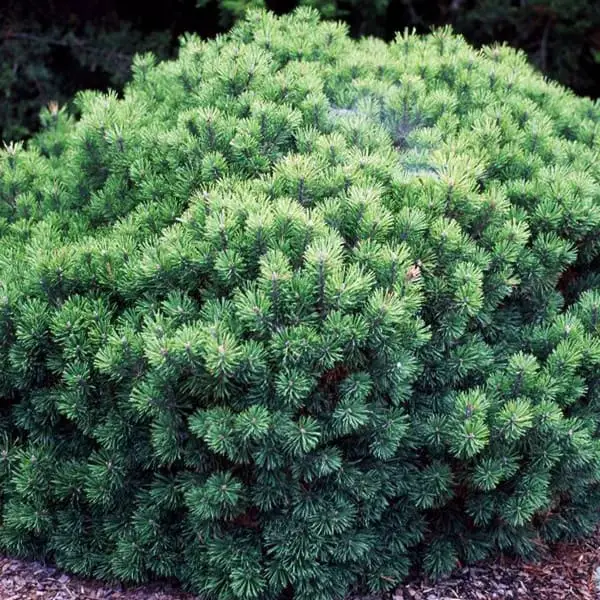
A mature Mops Mugo Pine typically reaches roughly 3 to 4 feet tall and 3 to 4 feet wide, although actual size can vary with growing conditions and age. It grows slowly, so I don’t have to worry about it swallowing the garden overnight.
Its natural shape tends to remain rounded, dense, and mound-like.
| Feature | Typical Mature Character |
| Height | About 3–4 feet |
| Width | About 3–4 feet |
| Shape | Rounded, mounded, compact |
| Growth rate | Slow |
| Pruning needs | Usually minimal |
I give mine enough room to spread rather than squeezing it into a narrow corner. A little breathing room goes a long way with conifers. Crowding can reduce airflow and make maintenance more difficult.
| Learn: Guide for Sherwood Compact Mugo Pine (Pinus Mugo ‘Sherwood Compact’) Care |
Watering My Mops Mugo Pine
Watering is simple once I stop treating the calendar like a boss.
When a Mops Mugo Pine has just gone into the ground, I water it regularly so the roots can settle in and explore the surrounding soil. During hot, dry weather, I check the soil more often because newly planted roots haven’t developed the same drought tolerance as an established plant.
Once established, Pinus mugo ‘Mops’ handle dry conditions quite well.
I don’t automatically water it every week forever. Instead, I check the soil and consider the weather.
My simple soil test
I push my finger a couple of inches into the soil near the root zone.
- If the soil feels slightly moist, I wait.
- If the upper layer feels dry and the plant has gone through a prolonged hot spell, I water deeply.
- If the soil stays wet for days, I hold off and investigate the drainage.
When I water, I prefer a thorough soak rather than a quick splash. Deep watering encourages the roots to explore farther into the soil.
The golden rule is simple: moist is fine; soggy is not.
Choosing the Right Soil
If there’s one thing I refuse to compromise on with this pine, it’s drainage.
Mops Mugo Pine tolerates a range of soil types, including sandy, loamy, and even somewhat rocky soils, as long as excess water can move away from the roots.
I don’t try to create a complicated laboratory-grade soil recipe. Instead, I focus on texture and drainage.
| Soil Condition | How I Approach It |
| Sandy soil | Usually drains well; add organic matter if it lacks fertility |
| Loamy soil | Excellent general choice |
| Heavy clay | Improve drainage and avoid low-lying planting spots |
| Rocky/gravelly soil | Often suitable if it retains some moisture |
| Constantly wet soil | Avoid |
The original soil recommendations for this plant mention clay, loam, chalk, and sand almost as if I need all four ingredients in one bucket. I don’t see it that way. What matters most is creating a soil environment that drains efficiently without becoming completely dry immediately after watering.
A slightly acidic to neutral soil generally works well, and Pinus mugo can tolerate a fairly broad range of soil conditions.
| Read: Austrian Pine (Pinus Nigra): Plant Care and Growing Guide |
Give It Plenty of Sun
Sunlight is where I let this little pine spread its wings.
Full sun is ideal. I aim for at least six hours of direct sunlight when possible.
The more sunlight the plant receives, the better chance it has to maintain its compact, dense growth habit. A location with insufficient light can encourage weaker or more open growth.
Partial shade can work in some situations, particularly in very hot climates, but I wouldn’t tuck this pine beneath a dense canopy and expect it to look its best.
When choosing between a sunny, open bed and a dark corner beside a building, I know which one I’m picking.
The sunny bed wins.

What the Foliage Looks Like
The foliage provides the evergreen backbone of this plant.
Mops Mugo Pine produces stiff, slender needles arranged in pairs. They typically display shades of medium to dark green, sometimes with a blue-green cast depending on growing conditions and season.
The needles remain attached through winter, giving the plant a consistent appearance when deciduous shrubs have lost their leaves.
That year-round presence makes it useful for adding structure to a landscape. It can act like a little anchor in a planting bed while flowering perennials come and go around it.
Does Mops Mugo Pine Need Pruning?
Usually, not much.
That’s another reason I enjoy growing it.
The cultivar naturally develops a rounded form, so I don’t need to spend every spring standing over it with pruning shears. If a branch becomes damaged, dead, or awkwardly positioned, I can remove it carefully.
I avoid aggressive pruning into old, bare wood because pines generally don’t respond well when I cut beyond their living needle-bearing growth.
For most gardeners, the best pruning strategy is simply:
- Remove dead or damaged branches.
- Remove obviously crossing or problematic growth.
- Maintain its natural rounded shape.
- Avoid unnecessary heavy pruning.
Let the plant do what it was bred to do.
Drought and Deer Tolerance
Mops Mugo Pine has a useful combination of toughness and compact beauty.
Once established, it tolerates drought reasonably well, especially when planted in well-drained soil. That doesn’t mean I abandon it during a severe drought, but it usually copes better than many moisture-loving ornamental shrubs.
Deer also tend to leave mature Mugo Pines alone more often than they do many broadleaf garden plants.
Of course, no plant comes with a magical force field. Hungry wildlife can browse plants they normally ignore, especially when food becomes scarce. Still, I consider this pine a practical choice for landscapes where deer pressure is a concern.
Where I Use Mops Mugo Pine in the Garden
This is where the little pine really earns its keep.
Its compact habit fits into many landscape styles, including:
- Rock gardens
- Gravel gardens
- Japanese-inspired gardens
- Cottage-style landscapes
- Contemporary gardens
- Foundation plantings
- Mixed borders
- Small gardens
- Container displays
- Sloped beds
- Evergreen groupings
I especially like using ‘Mops’ where I need a permanent mound of greenery. It can soften the edge of a pathway, sit comfortably among rocks, or provide contrast against plants with larger leaves.
In a container, it can also become a long-term focal point as long as the pot provides excellent drainage and enough room for the root system.
Companion Plants for Mops Mugo Pine
Because the pine has a strong, rounded silhouette, I like pairing it with plants that offer a different texture or seasonal interest.
Some possible companions include:
| Companion | Why I Like the Pairing |
| Japanese maple | Fine leaves contrast with dense pine needles |
| Holly (Ilex) | Adds glossy foliage and another evergreen texture |
| Ornamental grasses | Soft movement contrasts with the pine’s structure |
| Sedum | Works naturally in dry, rocky beds |
| Heuchera | Colorful foliage adds contrast |
| Creeping thyme | Excellent around rocks and gravel |
| Spring bulbs | Add seasonal color around the evergreen mound |
I don’t try to make every plant match perfectly. A good garden needs contrast. The pine supplies the bones, while surrounding plants can bring the movement, color, and seasonal fireworks.
Seasonal Care
Because Mops Mugo Pine stays evergreen, I get to enjoy it in every season.
Spring: I watch for fresh growth and check for damaged branches after winter.
Summer: I pay closer attention to watering during prolonged heat and drought.
Fall: I let natural rainfall do much of the work and make sure fallen debris doesn’t create a constantly damp environment around the base.
Winter: I mostly leave it alone. Its cold tolerance makes it a reliable winter feature.
That low-maintenance rhythm suits me perfectly. I don’t want every plant in my garden demanding a full-time job.
My Final Thoughts on Mops Mugo Pine
The Mops Mugo Pine proves that a plant doesn’t have to be enormous to make a lasting impression.
Pinus mugo ‘Mops’ gives me year-round greenery, a naturally rounded shape, strong cold tolerance, and useful drought resistance once established. It also grows slowly, which means I can enjoy its tidy form without constantly reaching for the pruning shears.
If I had to boil its care down to three things, I’d remember these:
- Give it plenty of sunlight.
- Plant it in soil that drains well.
- Water deeply when it needs moisture, especially while it establishes.
Get those basics right, and this little evergreen can become one of the quiet workhorses of the garden. It doesn’t shout for attention. It simply sits there, season after season, holding the landscape together—and sometimes those are exactly the plants I appreciate most.
If you’d like, I can also turn this into a more SEO-focused version with an SEO title, meta description, LSI/NLP keywords, FAQ section, and a stronger search-friendly introduction.