Where Do Geese Sleep? The Surprisingly Clever Sleeping Habits of Geese

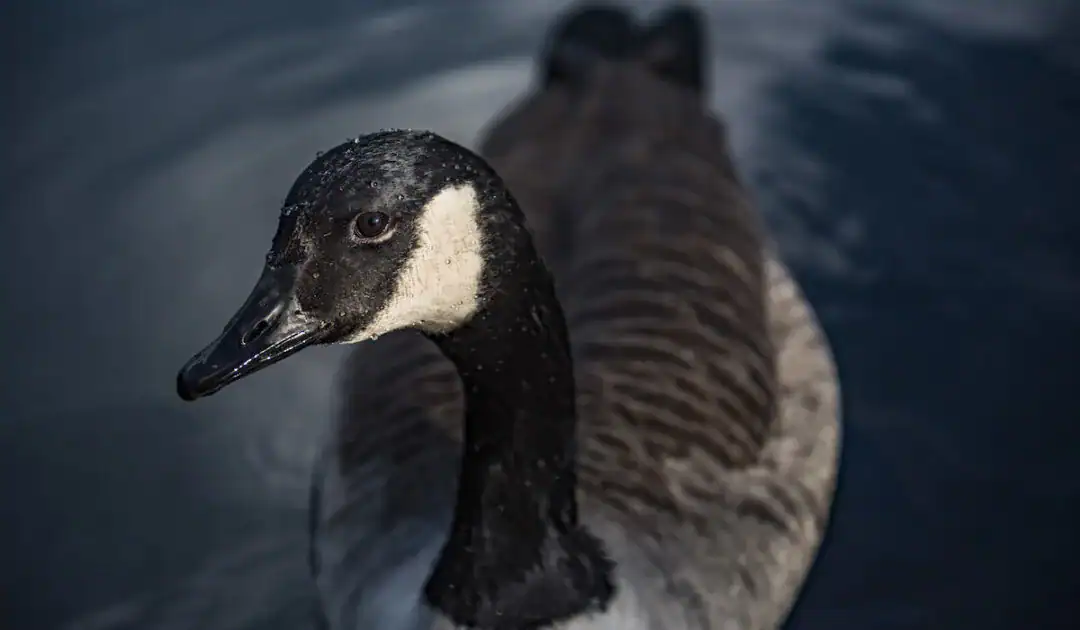
Every evening at a small farm near me, two geese named Betty and Bert stage the same little parade like clockwork. Around 5:45 PM, they waddle across the riding arena with all the confidence of landowners inspecting their property taxes. Riders steer horses around them. Barn cats step aside. Humans wait patiently.
By six o’clock sharp, Betty and Bert settle into their favorite corner stall in the horse barn like an elderly couple claiming seats at their favorite diner booth.
Watching them got me thinking one day:
Where do geese actually sleep in the wild?
After all, not every goose has a cozy horse stall waiting for them at bedtime. Some live on lakes. Some roam farms. Others migrate thousands of miles every year through brutal weather and open skies.
Turns out, geese have some genuinely fascinating sleeping habits. And honestly, the deeper I dug into it, the stranger and cooler it became.
These birds don’t just sleep anywhere — they sleep with survival wired into every feather.
Geese Don’t Sleep in Nests Like Most People Think
Before I learned more about geese, I pictured birds sleeping tucked inside cozy little nests like scenes from a children’s book.
Reality works differently.
Birds mostly use nests as nurseries, not bedrooms.
That surprised me too.
A goose builds a nest primarily for:
- Laying eggs
- Protecting goslings
- Incubation
- Raising young
Once nesting season ends, geese usually abandon the nest entirely.
It’s less “home sweet home” and more “temporary maternity ward.”
So if geese don’t sleep in nests, where do they actually spend the night?
That depends on whether they’re wild or domesticated.
Wild Geese Usually Sleep on Water
Wild geese prefer sleeping directly on the water whenever possible.
At first glance, that sounds uncomfortable. But from a survival standpoint, it makes perfect sense.
Water acts like a natural security system.
If predators approach through the water, vibrations and movement alert the flock almost instantly. A sneaky fox may creep through grass unnoticed, but crossing open water quietly? That’s a different story.
Why Wild Geese Sleep on Water
| Advantage | Why It Helps |
| Predator protection | Water creates distance from land predators |
| Better visibility | Open water provides clear sightlines |
| Group safety | Flocks watch out for one another |
| Faster escape | Geese can take off quickly if threatened |
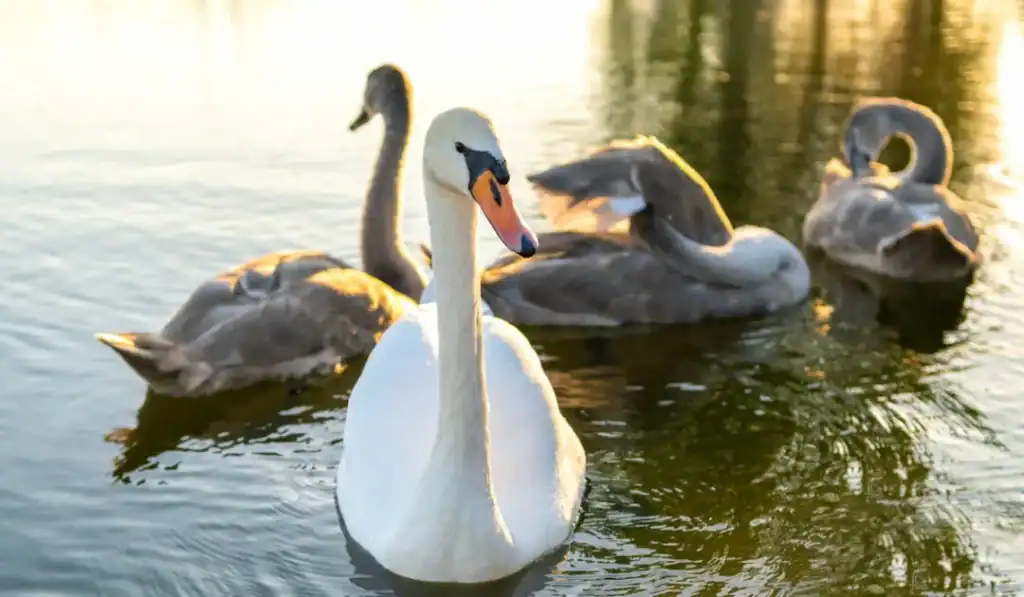
Wild geese usually sleep floating together in groups, almost like a feathered raft drifting quietly under moonlight.
And honestly, there’s something oddly peaceful about that image.
Some Geese Sleep on Small Islands
When open water isn’t ideal, geese often choose small islands for nighttime roosting.
Tiny islands give them the best of both worlds:
- Dry land
- Distance from predators
Coyotes, wolves, and foxes struggle to reach isolated patches of land without making noise or exposing themselves.
Geese may not look like military strategists, but they certainly think like survival experts.
Nature handed them caution, instincts, and excellent group coordination.
That combination keeps them alive.
Geese Can Literally Sleep With One Eye Open
This part blew my mind the first time I learned it.
Geese can sleep with one eye open.
No joke.
They use something called unihemispheric slow-wave sleep, or USWS for short. Basically, one half of the brain rests while the other half stays awake and alert.
It’s like running half your house on backup power during a storm.
What Happens During USWS?
| Brain Side | What It Does |
| One hemisphere | Sleeps and rests |
| Other hemisphere | Watches for danger |
That means a goose can:
- Rest
- Watch for predators
- Stay partially alert
- React quickly to danger
So if you ever see a goose appearing asleep while one eye stays half-open, that bird probably isn’t judging you.
Probably.
It’s simply keeping guard.
Honestly, geese sleep like exhausted security guards pulling the night shift.
Geese Take Turns Standing Watch
What makes this even more fascinating is how flock behavior works during sleep.
Geese sleeping around the outer edges of a flock stay more alert. Those birds often rely heavily on their “half-awake” sleep mode to monitor danger.
Meanwhile, geese tucked safely into the middle of the group enjoy deeper sleep.
It’s basically a rotating neighborhood watch program powered by feathers and instinct.
Goose Flock Sleeping Roles
| Position in Flock | Sleep Pattern |
| Outer edge geese | Light sleep / alert |
| Middle flock geese | Deeper sleep |
| Sentinel birds | Watch for threats |
This teamwork helps entire flocks survive dangerous nights.
And honestly, humans could learn a thing or two from that kind of cooperation.
Geese Even Sleep During Flight
Now here’s where things start sounding like science fiction.
Migrating geese can sleep while flying.
Seriously.
During long migrations, geese flying in their famous V-formation use their half-brain sleep system while staying airborne.
The lead goose handles navigation and breaks wind resistance for the group. After a while, another goose rotates forward to take over while the tired leader drifts back for recovery.
It works like cyclists drafting behind one another during a race.
Why Geese Fly in V-Formation
- Conserves energy
- Reduces wind resistance
- Improves communication
- Allows rotation of leadership
- Supports rest during migration
Nature engineered geese like long-haul travelers built for endurance.
Meanwhile, most of us struggle to stay awake during a 20-minute Zoom meeting.
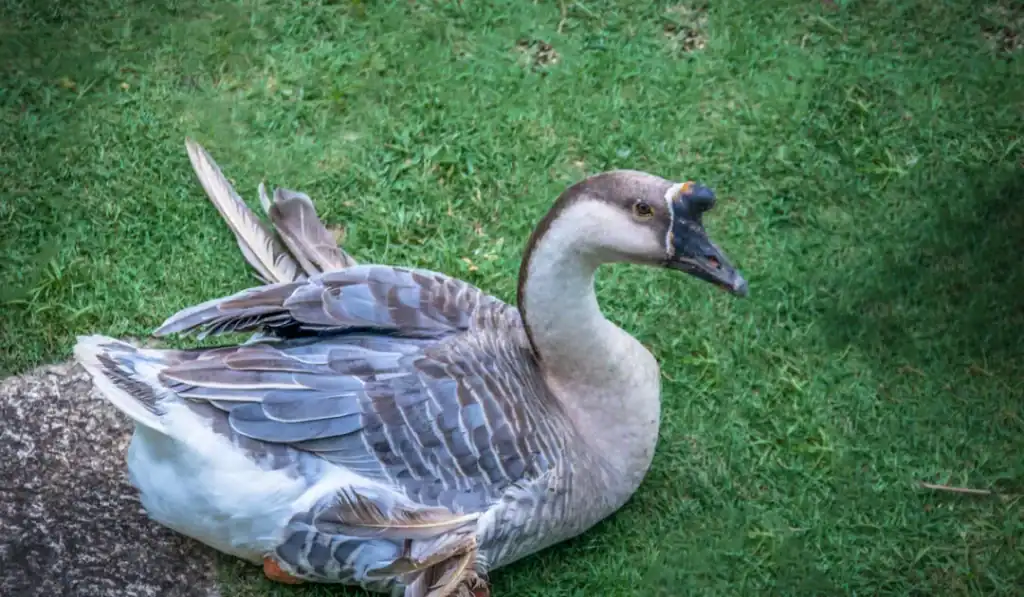
Domestic Geese Sleep Almost Anywhere
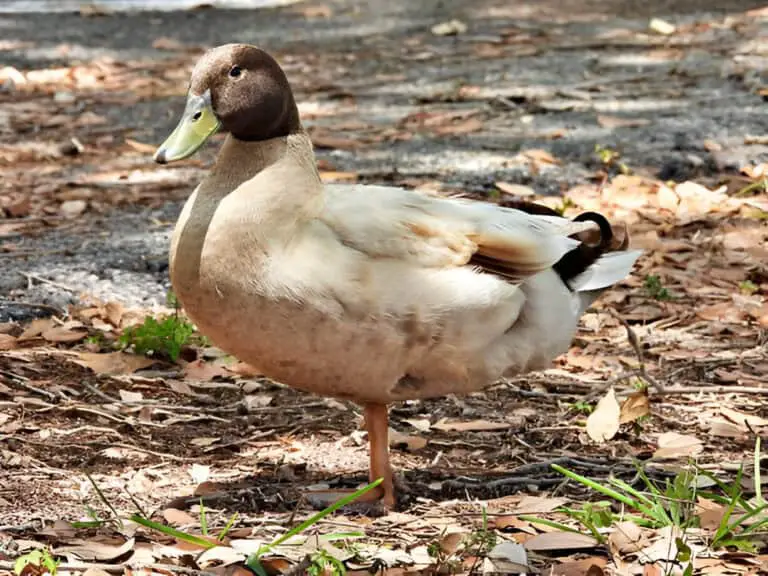
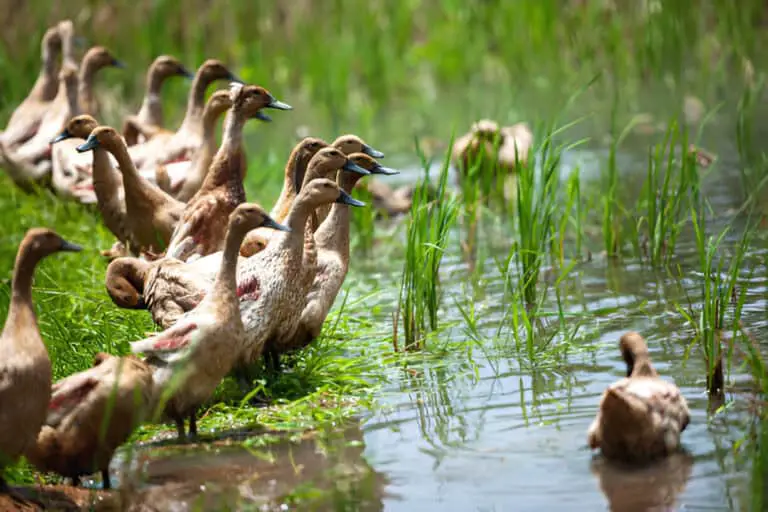
Domestic geese live a much easier life than their wild cousins.
Without constant predator threats, farm geese become surprisingly relaxed about sleeping arrangements.
Some geese:
- Sleep inside barns
- Curl up in sheds
- Rest under porches
- Bed down in grass
- Claim horse stalls like tiny feathery landlords
Honestly, domesticated geese often behave like stubborn old farmers who refuse to sleep anywhere except “their spot.”
Betty and Bert certainly do.
Every evening, they march straight to their favorite stall without fail.
Routine becomes deeply important for pet geese.
Do Domestic Geese Need a Coop?
Technically, no — geese don’t require a traditional coop like chickens do.
But they absolutely need protection.
A sleeping goose on an open lawn may look calm and confident, but nighttime predators see opportunity.
Common Nighttime Threats to Domestic Geese
| Predator | Risk Level |
| Foxes | High |
| Coyotes | High |
| Stray dogs | Very high |
| Raccoons | Moderate |
| Bobcats | Moderate |
Even large geese can fall victim to determined predators.
That’s why secure nighttime shelter matters so much.
A sturdy enclosure, shed, or fenced area dramatically improves their safety.
Can Geese Sleep Outside in Winter?
Absolutely.
Geese handle cold weather remarkably well.
Their dense down feathers trap heat incredibly efficiently. In fact, goose down works so well at insulation that humans literally stuff it into expensive winter jackets and comforters.
Nature built geese wearing feathered sleeping bags.
How Geese Stay Warm
- Thick down feathers
- Dense waterproof outer feathers
- Fat reserves
- Group sleeping behavior
- Sheltered resting spots
Of course, extreme weather still affects them. Ice storms, freezing rain, and harsh winds create dangerous conditions for any animal.
But ordinary winter cold? Geese usually shrug it off like seasoned mountain men.
Why Geese Seem So Relaxed While Sleeping
One thing I’ve noticed around geese is how calm they often appear while resting.
That calmness comes from confidence.
Geese rank among the more formidable birds on many farms. They’re large, loud, territorial, and surprisingly intimidating when angry.
Honestly, an angry goose charges with the emotional energy of someone defending a parking spot on Black Friday.
Predators know this too.
Most smaller threats prefer easier targets.
That natural confidence gives geese more flexibility in choosing where they sleep compared to smaller birds constantly hiding in bushes or trees.
What Time Do Geese Usually Go to Sleep?
Geese typically settle down around sunset.
As daylight fades, their behavior shifts noticeably:
- Movement slows
- Vocalizations decrease
- Flocks gather together
- Birds seek safe resting spots
Wild geese often become most active again at sunrise.
Farm geese usually follow routines connected to feeding schedules, human activity, and seasonal daylight patterns.
Some geese practically run on internal alarm clocks.
Betty and Bert certainly do.
Rain, noise, horses, or complete barn chaos won’t stop their evening bedtime march.

What I’ve Learned From Watching Geese
The more I observe geese, the more fascinating they become.
Most people only notice:
- Loud honking
- Messy droppings
- Aggressive behavior
But underneath all that attitude sits a brilliantly adapted bird.
Geese:
- Coordinate group protection
- Navigate massive migrations
- Sleep with half their brain awake
- Survive brutal weather
- Protect one another during rest
That’s impressive.
Nature didn’t make geese elegant sleepers curled inside cozy nests. Instead, it made them practical survivors capable of resting almost anywhere while keeping danger at arm’s length.
Honestly, geese sleep like seasoned travelers — one eye open, bags packed, and ready to move at a moment’s notice.
And after learning all this, I can’t help respecting them a little more every time I hear honking overhead at dusk.