How Do Goats Show Affection? The Surprisingly Sweet Ways Goats Say “I Love You”

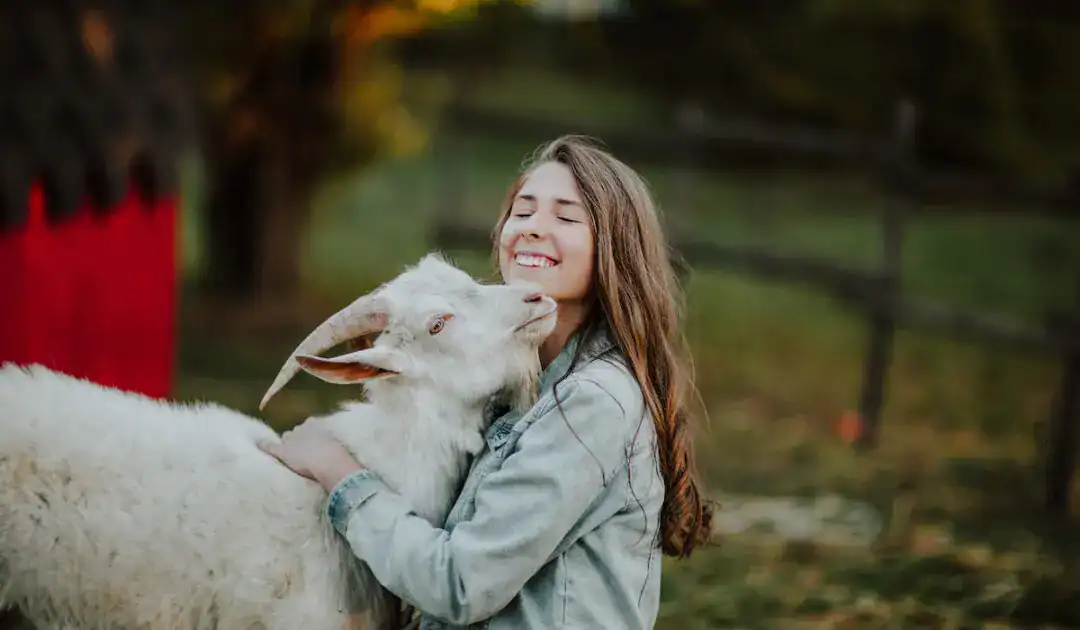
I’ll admit it — the first time one of my goats stared directly into my soul, I got a little uncomfortable.
Not scared. Just… observed.
You know that look dogs give when they want a snack? Mix that with the intensity of a philosophy professor questioning your life choices, and you’ve basically got the full goat experience.
At first, I assumed goats only tolerated humans because we carried food buckets. Fair enough. Most farm animals seem to operate under a “you feed me, therefore you may exist” agreement.
But after spending more time around goats, I realized something surprising:
These animals genuinely form emotional bonds with people.
And not in some vague, wishful-thinking pet-owner way either. Science actually backs it up.
Goats show affection through eye contact, vocalizations, body language, touch, and social behavior. In many ways, they act more like dogs than most people expect from barnyard livestock.
Honestly, goats are like tiny furry extroverts with hooves and strong opinions.
Once you learn how to read their behavior, their affection becomes impossible to miss.
Goats Are Far More Social Than People Realize
Most people think of goats as mischievous escape artists chewing fences and climbing things they absolutely should not climb.
To be fair… that description isn’t wrong.
But underneath all that chaos sits an incredibly social and emotionally intelligent animal.
Goats thrive on:
- Companionship
- Interaction
- Attention
- Routine
- Social bonding
They don’t simply coexist with humans. Many goats actively seek relationships with their owners.
And honestly, once a goat chooses you as “their person,” you’ll know it pretty quickly.
Usually because they’ll follow you around like a tiny horned shadow demanding snacks and emotional support.
Science Says Goats Actually Bond With Humans
This part surprised me the most.
Researchers studying goat behavior discovered that goats communicate with humans in ways remarkably similar to dogs.
That’s a pretty big deal.
For years, people mostly viewed goats as livestock animals rather than companion animals. But modern studies suggest goats possess advanced social intelligence and emotional awareness.
Scientists Observed That Goats:
| Behavior | What It Suggests |
| Make eye contact with humans | Trust and communication |
| Seek human interaction | Social bonding |
| Ask humans for help | Emotional connection |
| Prefer familiar people | Recognition and attachment |
| Respond to human emotions | Social awareness |
Unlike sheep, goats tend to think more independently and interact more directly with humans.
In other words, goats don’t just tolerate us.
They build relationships with us.
That changes everything.
1. Goats Show Affection Through Eye Contact
If you own goats, you’ve probably experienced “The Stare.”
A goat locks eyes with you and refuses to look away.
At first, it feels almost confrontational. But in many cases, it actually signals trust and affection.
Scientists call this behavior “human-directed visual orientation,” which sounds unnecessarily complicated for something that basically means:
“Hey human, I’m paying attention to you because I like you.”
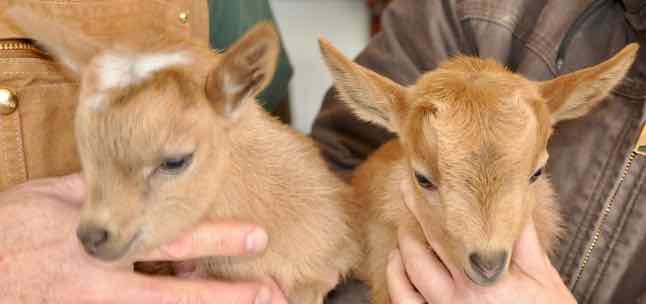
Why Goats Stare at Humans
Sometimes goats stare because they:
- Want food
- Need help
- Feel curious
- Seek attention
- Feel emotionally connected
But here’s the interesting part: goats only maintain prolonged eye contact with humans they trust.
That trust matters.
Animals don’t willingly make themselves vulnerable around creatures they fear.
So when your goat stares at you calmly, they’re basically offering the goat equivalent of emotional openness.
Kind of sweet, honestly.
Goats Ask Humans for Help
Researchers also noticed goats look toward humans when facing problems they can’t solve alone.
For example:
- A stuck gate
- An unreachable treat
- An unfamiliar object
- Discomfort or stress
Instead of endlessly struggling, goats often glance toward nearby humans for assistance.
That behavior reveals something deeper than intelligence.
It reveals relationship.
The goat believes:
- You understand them.
- You care enough to help.
That’s affection wrapped inside communication.
2. Physical Touch Is a Goat Love Language
Once goats trust you, personal space disappears forever.
Forget polite boundaries.
Your goats will:
- Rub against your legs
- Lean into scratches
- Stand beside you
- Nudge your hands
- Follow you everywhere
Honestly, affectionate goats behave like oversized cats with stronger opinions.
And yes — goats genuinely enjoy being pet.
But they do have preferences.
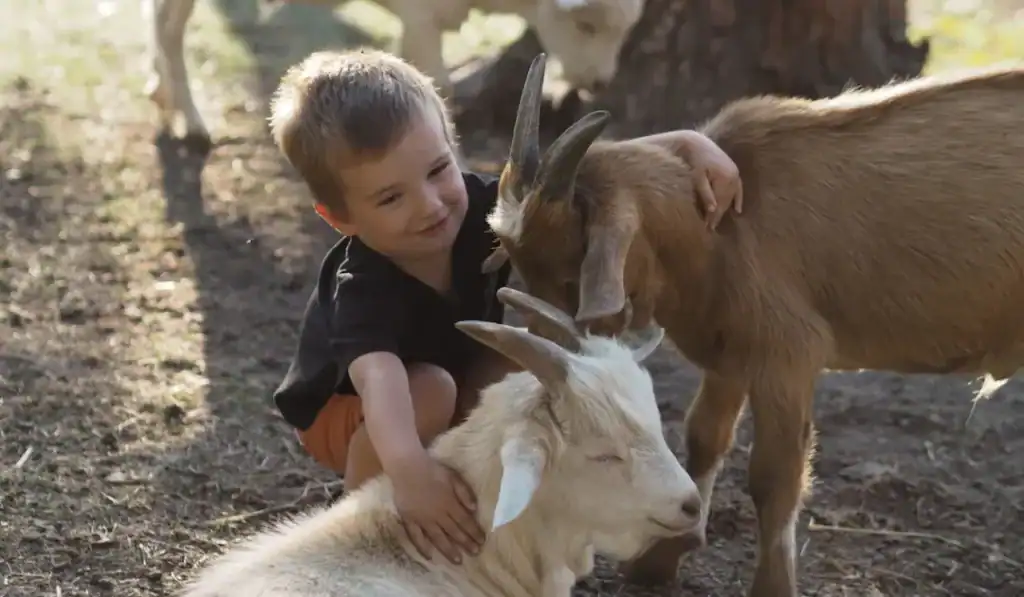
Favorite Goat Scratching Spots
| Area | Goat Reaction |
| Chest | Usually loved |
| Underarms | Surprisingly popular |
| Base of horns | Relaxing |
| Neck | Often calming |
| Back | Less preferred than dogs |
I learned pretty quickly that goats don’t want the same kind of petting dogs enjoy.
Scratch their chest properly, though, and some goats practically melt like butter on hot toast.
Goats Learn Affection From Each Other
One funny thing I’ve noticed?
Goat affection spreads socially.
If one goat approaches you for pets and receives attention, the others immediately notice.
Suddenly, the whole herd gathers around like shoppers charging toward a Black Friday sale.
Goats watch each other constantly.
If one goat trusts you, the others often become more comfortable too.
That herd mentality plays a huge role in how goats build social confidence.
| Related: When to Wean Goats: What I Learned the Hard Way About Raising Healthy Goat Kids |
3. Goats Use Vocalizations to Express Happiness
Goats make a shocking number of sounds.
Some bleat softly.
Others sound like rusty lawn equipment screaming into the void.
But over time, you start recognizing emotional differences in their voices.
And yes — goats absolutely vocalize affection.
Happy Goat Sounds vs Stress Sounds
| Vocalization | Meaning |
| Soft steady bleat | Happiness or greeting |
| Loud repeated cries | Stress or frustration |
| Short gentle calls | Social communication |
| High-pitched yelling | Anxiety or hunger |
When goats see a favorite person approaching, they often produce calmer, more stable vocalizations.
It reminds me a lot of how dogs wag their tails differently depending on emotion.
Goats communicate emotionally through tone and consistency.
Once you spend enough time around them, you begin understanding their “language” surprisingly well.
Body Language Says a Lot Too
Goats wear their emotions all over their bodies.
You just need to know what signals to watch for.
Signs a Goat Likes You
- Relaxed posture
- Approaching willingly
- Leaning against you
- Calm ears pointed forward
- Following you around
- Quiet companionship
One of my favorite signs is when a goat simply chooses to sit or stand near you without demanding anything.
That kind of calm presence speaks volumes.
Animals don’t relax near creatures they distrust.
Happy Goats Often Stay Quiet
Ironically, a peaceful goat often says very little.
Goats constantly screaming or crying usually feel:
- Stressed
- Lonely
- Frustrated
- Anxious
But content goats?
They often settle into comfortable silence.
It’s similar to spending time with close friends where nobody feels pressure to fill every quiet moment.
Comfort creates calm.

Goats Show Affection to Each Other Too
Goats don’t only bond with humans.
They form incredibly strong social bonds with fellow goats.
In fact, keeping a single goat alone often causes loneliness and stress.
Goats thrive in pairs or small herds.
How Goats Show Affection to Other Goats
| Behavior | Meaning |
| Sleeping together | Trust and bonding |
| Grooming | Social comfort |
| Following one another | Attachment |
| Eating together | Group security |
| Quiet companionship | Relaxed social connection |
I’ve watched bonded goats nap side-by-side like lifelong best friends.
And honestly, separating close goat companions feels a little like breaking up an old married couple.
They notice.
| Check out: My Goat Can’t Stand but Eats and Drinks Normally: What to Do? |
Headbutting Doesn’t Always Mean Aggression
This confuses many new goat owners.
Goats naturally establish hierarchy through pushing, headbutting, and dominance displays.
But that behavior doesn’t always signal hatred or aggression.
Sometimes it’s simply herd politics.
Think of it as goats arguing over office seating arrangements.
Once hierarchy settles, most goats return to peaceful coexistence.
Goats Bond With Other Animals Too
One thing I genuinely love about goats is how socially flexible they are.
Many goats happily bond with:
- Horses
- Donkeys
- Ponies
- Mules
- Dogs
They simply enjoy companionship.
A lonely goat often struggles emotionally, while socially fulfilled goats become calmer, friendlier, and more confident.
Honestly, goats approach friendship with the enthusiasm of people networking at a party.
Everyone’s a potential buddy.
Why Goats Make Surprisingly Good Companion Animals
I understand now why goats continue growing in popularity as pets.
They combine:
- Intelligence
- Curiosity
- Emotional awareness
- Humor
- Affection
Sure, they’ll chew things they shouldn’t.
Yes, they’ll test fences like tiny furry escape convicts.
And absolutely, they’ll occasionally act like chaos wrapped in fur.
But goats also build genuine emotional connections with humans in ways many people never expect.
That relationship feels real.
Learning to “Speak Goat”
The longer I spend around goats, the more I realize affection doesn’t always look the same across species.
Dogs wag tails.
Cats purr.
Goats?
They stare.
They lean.
They follow.
They bleat softly.
They stand beside you quietly.
Their affection feels subtle at first, but once you understand their language, it becomes crystal clear.
And honestly, there’s something deeply charming about earning the trust of an animal smart enough to choose connection willingly.
Goats don’t fake affection.
When a goat decides they like you, you’ve officially joined their herd.
That’s a pretty special thing.