Nest Spruce (Picea abies ‘Nidiformis’): My Complete Plant Care and Growing Guide

There’s something about a Nest Spruce that makes a garden feel a little more settled. Its low, rounded shape doesn’t demand attention like a towering tree, but it quietly fills a space with year-round greenery. When I want an evergreen that looks neat without turning into a gardening chore, Nest Spruce (Picea abies ‘Nidiformis’) is one of the plants I keep coming back to.
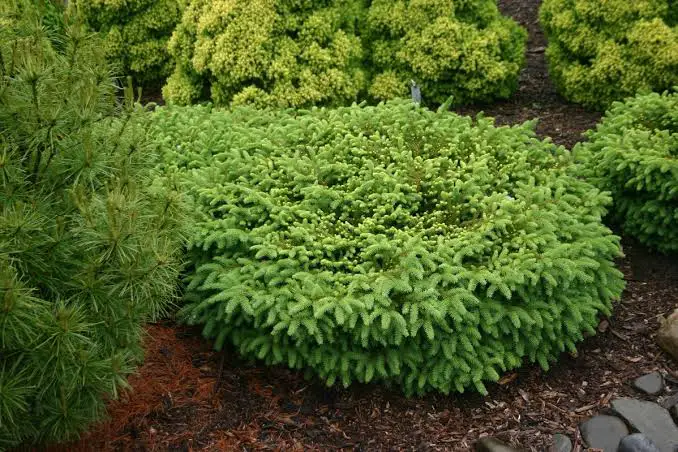
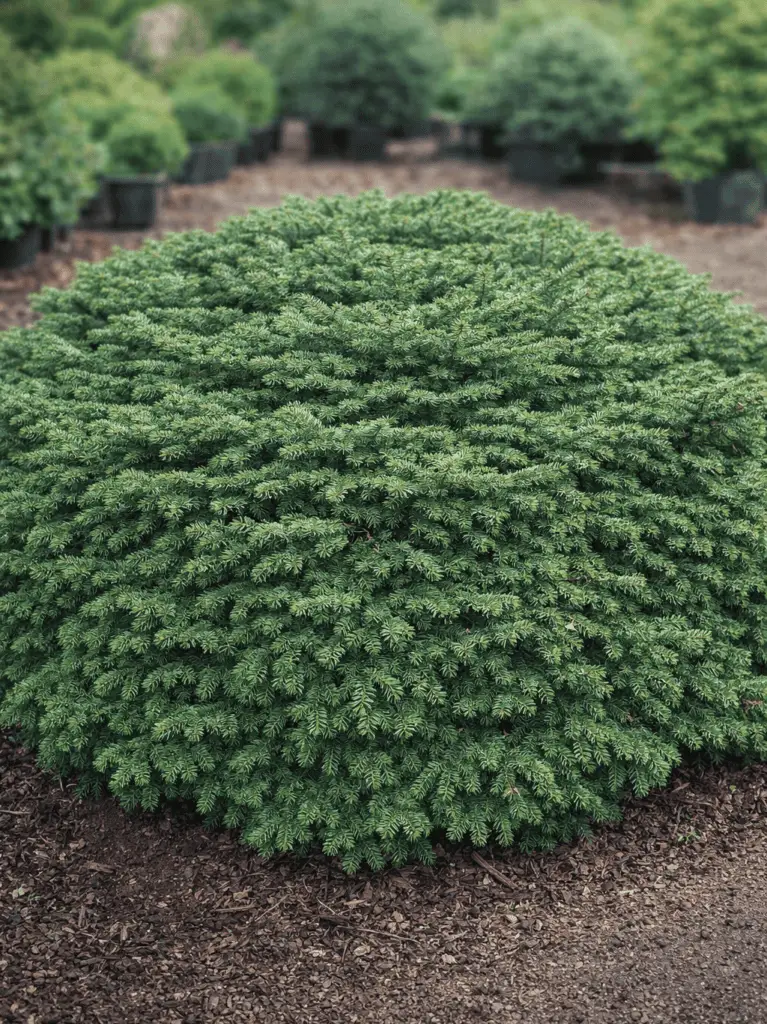
You may also hear it called Norway Spruce ‘Nidiformis,’ Nidiformis Norway Spruce, or Bird’s Nest Spruce. That last name makes perfect sense when you see its shape. Instead of shooting upward like a typical spruce, this dwarf cultivar develops a broad, flattened center with gently rising branches around the edges, almost like a bird has tucked a nest into the middle.
I particularly like its slow-growing nature. It gives me time to enjoy the plant without constantly reaching for the pruning shears. Once I understand its basic needs—sunlight, consistent moisture, and well-draining soil—it becomes a remarkably easygoing addition to the landscape.
Here’s everything I’ve learned about growing this charming evergreen.
At a Glance: Nest Spruce Care
I find it helpful to boil plant care down to the essentials before getting into the details. For Nest Spruce, the big three are water, light, and soil.
| Care Factor | What I Aim For |
| Light | Partial sun to full sun |
| Water | Regular moisture, especially during hot, dry weather |
| Soil | Moist but well-draining soil |
| Soil pH | Neutral to acidic |
| Growth rate | Slow |
| Foliage | Evergreen green needles |
| Mature habit | Compact, rounded, nest-like |
| Best uses | Borders, rock gardens, containers, specimen planting |
| Wildlife value | Can provide cover and interest for birds |
| Cold tolerance | Excellent in cold climates |
Once I have those basics covered, the rest feels like fine-tuning rather than rocket science.
Getting to Know Picea abies ‘Nidiformis’
Nest Spruce belongs to the Pinaceae family, the same broad family that includes many familiar pines, firs, spruces, and other conifers. Its botanical name is Picea abies ‘Nidiformis’, and it represents a compact form of Norway Spruce.
The cultivar name Nidiformis comes from the Latin word associated with a nest, which perfectly describes its unusual growth habit.
Unlike a standard Norway Spruce that eventually reaches impressive heights, this cultivar stays relatively compact. That makes it especially useful when I want the character of a spruce without sacrificing half the garden to a giant conifer.
And because it’s evergreen, it doesn’t punch the clock for only one season. It keeps its green needles throughout the year, giving the garden a dependable backbone even when flowering plants have packed their bags for winter.
Where Does Nest Spruce Grow Naturally?
The species behind this cultivar, Norway Spruce, comes from central and northern Europe. That background gives me an important clue about what the plant likes.
Knowing a plant’s native environment is a bit like reading its instruction manual. It tells me what conditions I should try to recreate rather than simply guessing and hoping for the best.
Nest Spruce handles cold conditions particularly well and suits a wide range of temperate climates. It can perform well across USDA hardiness zones roughly 3 through 8, although local conditions, soil exposure, and summer heat can all influence how well it performs.
If I live somewhere with scorching summers, I pay extra attention to watering and afternoon heat. In cooler regions, the plant usually has an easier time settling in.
Growth and Size: Give It Room to Breathe

One of the reasons I like Nest Spruce is its slow growth. It doesn’t race toward the sky overnight, so I don’t have to constantly rethink my garden design.
The plant typically develops a compact, rounded, spreading form. Depending on growing conditions and age, it can reach roughly 3 to 4 feet (90–120 cm) tall and wide, although mature specimens can sometimes spread considerably farther.
That spreading habit deserves some attention when I choose a planting location. A young plant may look almost comically small in its new home, but I always remind myself that today’s tiny shrub can become tomorrow’s landscape anchor.
| Feature | Typical Expectation |
| Growth rate | Slow |
| Height | Around 3–4 ft |
| Width | Around 3–4 ft, potentially wider with age |
| Shape | Rounded, broad, nest-like |
| Pruning needs | Usually minimal |
I prefer to give it plenty of breathing room instead of squeezing it between other shrubs. A generous planting area also allows its natural shape to shine.
How I Water My Nest Spruce
Watering sounds simple, but this is one area where I try not to run on autopilot.
Nest Spruce prefers consistent moisture, especially while it establishes itself. During hot or dry periods, I increase watering rather than letting the soil turn bone-dry for extended stretches.
At the same time, I don’t want to create a miniature swamp around the roots. Wet, poorly draining soil can cause just as many headaches as drought.
My favorite trick is still the simplest one: I check the soil with my finger.
I push a finger into the soil near the root zone. If the upper layer feels dry, I water thoroughly. If it still feels moist, I wait and check again later.
My watering checklist
- Water deeply rather than giving the plant a quick sprinkle.
- Check soil moisture before watering.
- Increase watering during prolonged heat or drought.
- Reduce watering during cool, rainy periods.
- Make sure excess water can drain away.
- Pay extra attention during the first growing season.
Once the roots settle in, Nest Spruce becomes considerably more forgiving.
Choosing the Right Soil
Good drainage is the name of the game here.
I aim for soil that holds enough moisture to keep the roots comfortable but still allows excess water to escape. A balanced mixture containing loam, sand, and some clay can provide a useful foundation when the native soil needs improvement.
I also prefer neutral to acidic soil for this spruce.
If my garden soil feels heavy and sticky after rain, I don’t simply plant and cross my fingers. I improved the drainage first. A little preparation at the beginning can save me a lot of trouble later.
The goal is simple: moist roots, not waterlogged roots.
How Much Sun Does Nest Spruce Need?
Nest Spruce generally performs best with partial sun to full sun, and I find that a bright location helps it maintain strong, attractive growth.
A position receiving more than six hours of direct sunlight per day works particularly well where the climate isn’t excessively hot.
In cooler climates, full sun is usually a straightforward choice. In very hot regions, however, I pay closer attention to heat stress. Morning sun combined with some protection from intense afternoon heat can sometimes provide a better balance.
| Light Level | My Take |
| Full sun | Excellent in suitable climates |
| Partial sun | Generally suitable |
| Deep shade | Not ideal |
I don’t expect this spruce to thrive tucked into a dark corner beneath a dense canopy. It may tolerate less light, but it won’t necessarily develop the compact, healthy appearance I want.
| Check out: Sun or Shade: Do Brussel Sprouts Need Full Sunlight? |
Evergreen Beauty Through Every Season
One of my favorite things about Nest Spruce is that it doesn’t disappear when the seasons change.
Spring brings fresh growth and renewed energy. Summer highlights its rich green needles. Autumn leaves many deciduous shrubs looking bare, while Nest Spruce keeps its evergreen character. Then winter arrives, and the plant becomes one of those quiet garden heroes that keeps the landscape from looking completely asleep.
Its needles stay green throughout the year and remain relatively short, generally under an inch long.
That consistency gives me something valuable in landscape design: structure.
Flowers come and go, but evergreen shrubs keep the garden stitched together.
Wildlife, Deer, and Rabbits
Nest Spruce can also add a little life to the garden.
Its dense structure can provide useful cover and interest for birds, making it a worthwhile choice if I want my garden to feel more connected to the wildlife around it.
It also has a useful tolerance to browsing from deer and rabbits, although I never treat any plant as completely deer-proof. Hungry wildlife can turn even supposedly untouchable plants into dinner when food becomes scarce.
Still, Nest Spruce generally makes a dependable choice for gardens where occasional animal visitors are part of the landscape.
Where I Like to Use Nest Spruce
This is where the plant really earns its keep.
Because of its compact shape, I can tuck Nest Spruce into all sorts of landscape designs without making it look out of place. Its rounded form works particularly well when I want to soften hard edges or add evergreen structure.
I especially like it in:
- Rock gardens
- Gravel gardens
- Contemporary landscapes
- Asian- or Zen-inspired gardens
- Rustic gardens
- Traditional borders
- Mixed shrub beds
- Containers
- Mass plantings
- Wildlife gardens
It also works beautifully as a specimen plant. Sometimes I simply give one enough space to stand on its own and let its unusual shape do the talking.
In a rock garden, its rounded silhouette creates a nice contrast against stones and angular features. In a modern landscape, it provides a clean evergreen shape without looking overly formal.
| Read on: Picea Mariana ‘Nana’ (Dwarf Black Spruce) Care and Growing Guide |
Companion Plants for Nest Spruce
When I build a planting scheme around Nest Spruce, I like to combine different textures rather than surrounding it with a wall of identical evergreens.
Spiraea makes an attractive companion because its flowering habit contrasts with the spruce’s evergreen structure. The result gives me both seasonal interest and dependable greenery.
Buddleja can also work well, particularly when I want to introduce flowers and additional wildlife interest.
The key is to avoid creating a crowded jungle. I give each plant enough room to grow naturally so that the Nest Spruce remains the star of its own little stage.
| Companion | Why It Works |
| Spiraea | Adds flowers and contrasting foliage |
| Buddleja | Adds flowering interest and attracts pollinators |
| Rock garden plants | Complement the spruce’s compact form |
| Low-growing perennials | Create layers around the evergreen structure |
Common Mistakes I Try to Avoid
Even an easy-care plant can struggle when we put it in the wrong conditions. With Nest Spruce, I keep a few common mistakes on my radar.
Overwatering: More water doesn’t always mean more growth. If the soil stays saturated, the roots can suffer.
Poor drainage: Heavy, compacted soil can hold too much moisture around the roots.
Too much shade: A dark planting spot can prevent the plant from developing the dense, attractive form I want.
Planting too close to other shrubs: Its slow growth can fool me into thinking it needs very little space. I plan for the mature plant, not the tiny nursery specimen.
Neglecting water during heat: Even established evergreens appreciate extra moisture during prolonged hot and dry periods.
Final Thoughts on Growing Nest Spruce
For me, Nest Spruce is the kind of plant that proves a garden doesn’t need constant drama to be beautiful. It grows slowly, keeps its greenery through the seasons, and develops a distinctive shape that adds personality without demanding center stage.
The care routine remains refreshingly straightforward: give it plenty of light, keep the soil consistently moist but well drained, and leave enough room for it to spread.
Once I get those fundamentals right, Nest Spruce largely takes care of itself.
I especially appreciate its versatility. Whether I place it among rocks, along a border, in a container, or as a standalone specimen, it brings a sturdy evergreen presence to the landscape. It may not be the fastest-growing shrub in the garden, but sometimes slow and steady wins the race.
And when winter strips the color from everything else, that little green nest is still sitting there, holding the fort.