Discover the 6 Different Types of Hydroponic Systems for Efficient Plant Growing

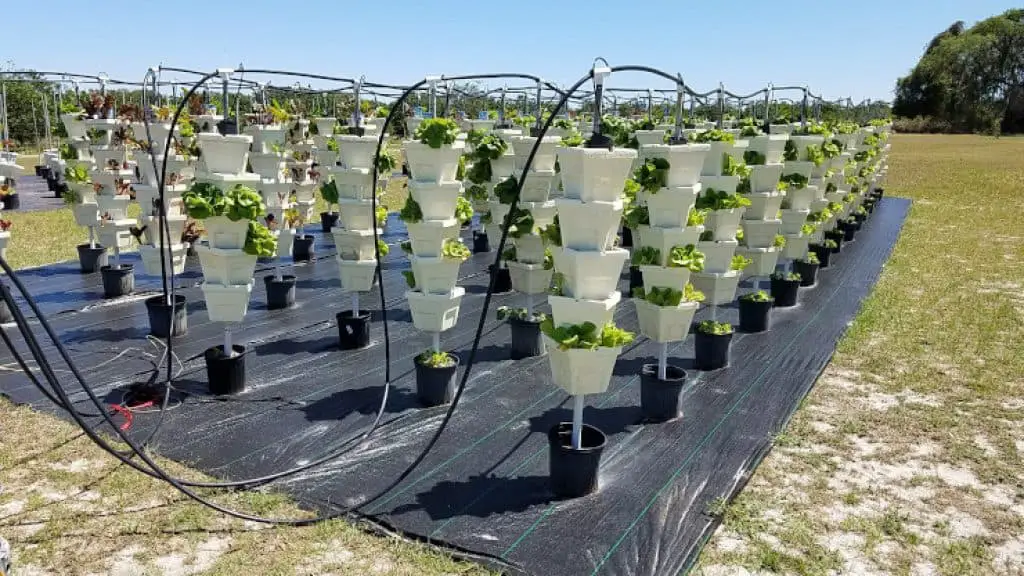
Hydroponics has completely changed the way I think about growing plants. Instead of relying on a traditional garden bed filled with soil, I can grow plants with water, nutrients, light, and a little bit of careful planning. Once I understood how the systems worked, I realized that hydroponics isn’t just for commercial farms or experienced growers. With the right setup, almost anyone can grow fresh herbs, leafy greens, and even fruiting crops at home.
The real challenge comes when you start comparing the different types of hydroponic systems. Deep water culture, nutrient film technique, ebb and flow, drip systems, and aeroponics all work on the same basic principle, but they deliver water and nutrients to plant roots in very different ways.
Some systems are wonderfully simple. Others require pumps, timers, tubing, and a little more patience. Choosing the right one can make the difference between a thriving indoor garden and a setup that leaves you scratching your head.
So, let’s look at the most popular hydroponic systems for efficient plant growing, how they work, and which plants suit each method best.
What Is a Hydroponic Growing System?
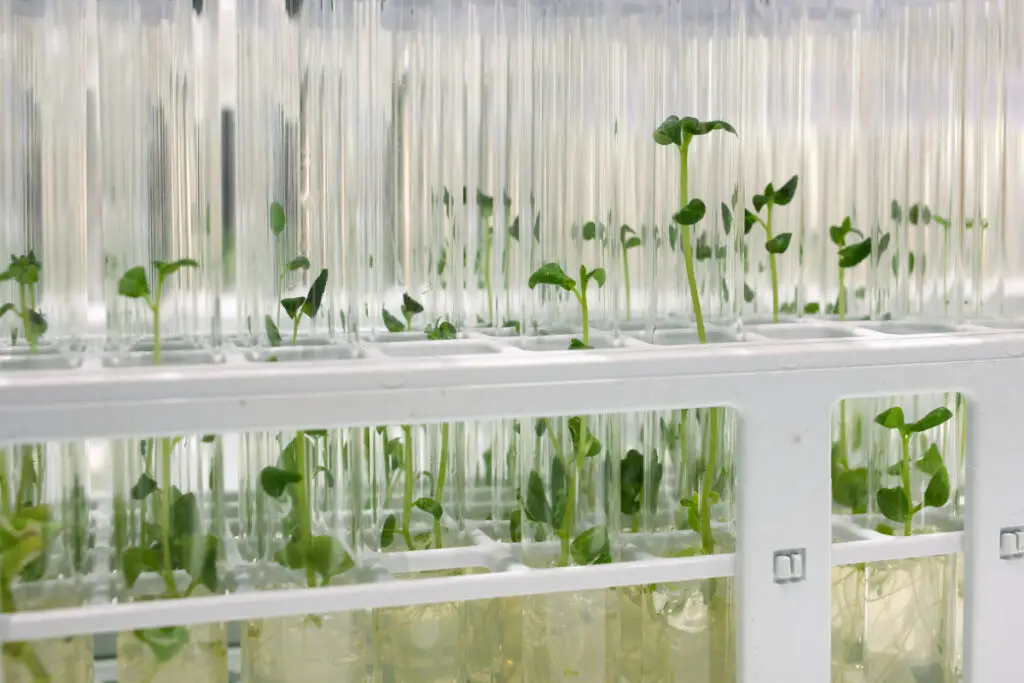
Hydroponics is a method of growing plants without traditional soil. Instead, plant roots receive water and essential nutrients directly through a carefully managed growing environment.
The roots may sit in water, receive a thin stream of nutrient solution, or grow inside an inert medium such as perlite, clay pebbles, coco coir, or rockwool.
What surprised me most about hydroponics was how little the roots actually need from soil. Soil mainly acts as an anchor and nutrient reservoir. In hydroponics, I can provide those essentials directly.
A successful system generally needs:
- Clean water
- A balanced hydroponic nutrient solution
- Adequate oxygen around the roots
- Appropriate light
- Suitable temperature
- Proper pH management
- Good circulation or irrigation
- A stable growing environment
Once these pieces fall into place, the plants can put their energy into growing instead of searching through soil for food.
| Check out: Best Plants for Hydroponic Growing: Vegetables, Fruits, and Flowers |
The Main Types of Hydroponic Systems
There isn’t one perfect hydroponic system for every gardener. Each design has its own strengths and weaknesses.
Here’s a quick comparison before we dig deeper:
| Hydroponic System | Difficulty | Best For | Main Advantage |
| Deep Water Culture | Easy | Lettuce, herbs | Simple and inexpensive |
| Nutrient Film Technique | Moderate | Leafy greens, herbs | Efficient water circulation |
| Ebb and Flow | Moderate | Herbs, vegetables | Flexible and versatile |
| Drip System | Moderate | Larger plants | Precise nutrient delivery |
| Wick System | Very easy | Small herbs | No pump required |
| Aeroponics | Advanced | Fast-growing crops | Excellent root oxygenation |
| Kratky Method | Easy | Leafy greens | Passive, low-maintenance growing |
Hydroponics is the large umbrella that covers several key types of hydroponic systems which we’ll outline below. Each technique has its own unique advantages and disadvantages. I’m sure there are many variations and combinations of systems but, for the most part, there are six main types of hydroponic systems:
[1] Wicking
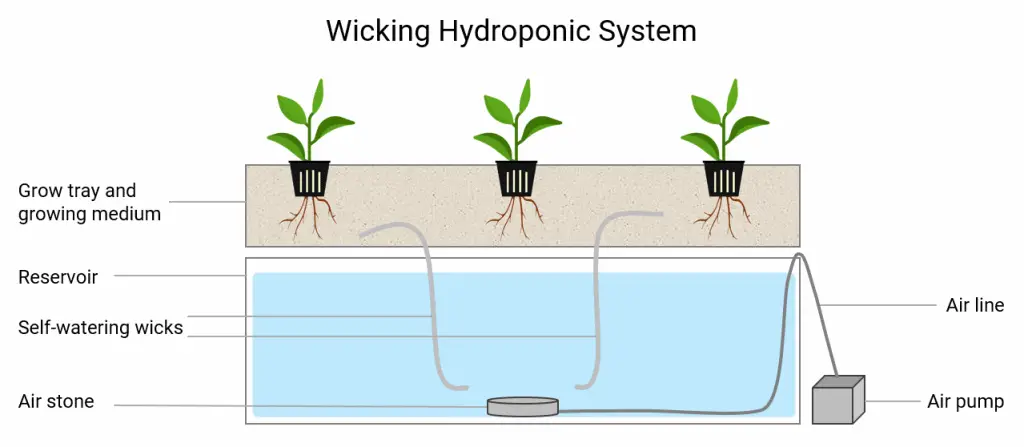
A wicking hydroponics system is the easiest to set up because it’s the only system that doesn’t specifically need electricity. With this system, a specific material acts as the “wick” that connects the plant roots to the nutrient solution. The wick slowly absorbs the liquid below and delivers it to the plant roots. Electricity is not necessary, but an air pump is optional.
The wick itself can be rope, felt, cotton, strips from a mop head or even the wick from a tiki torch! By now you probably get the idea. You just need something absorbent, so feel free to test different wicks out to see what works best for you.
You might use the wicking system to grow herbs or other small plants.
[2] Deep water culture (DWC)
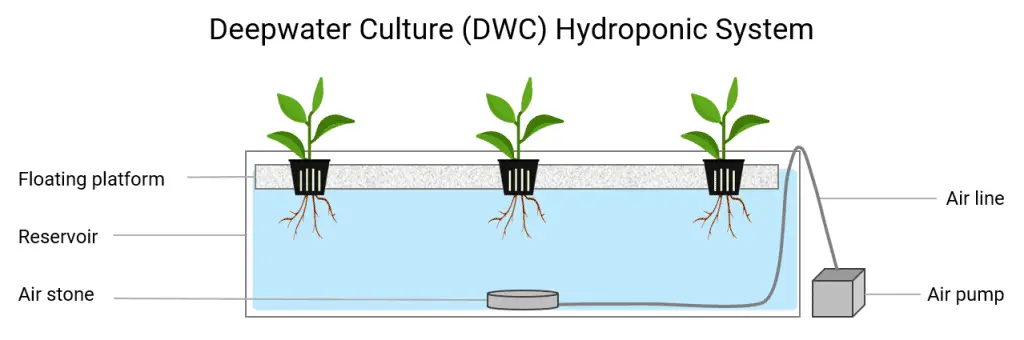
One of the most basic and easiest systems is deep water culture systems, or DWC. In the DWC system, the plant roots are suspended and hang directly down into the nutrient solution. There is basically no water being pumped or moving around because the roots sit directly in the nutrient solution at all times. An air pump provides the oxygen to the water which completes the system.
Water culture systems are a great choice for larger plants especially because the roots can have a lot more room than other systems mentioned below.
One of the most popular methods of any hydroponic system for beginners is known as the Kratky method. This is a form of deep water culture that eliminates all electrical components. Check out our Kratky article to learn more about that.
[3] Drip system
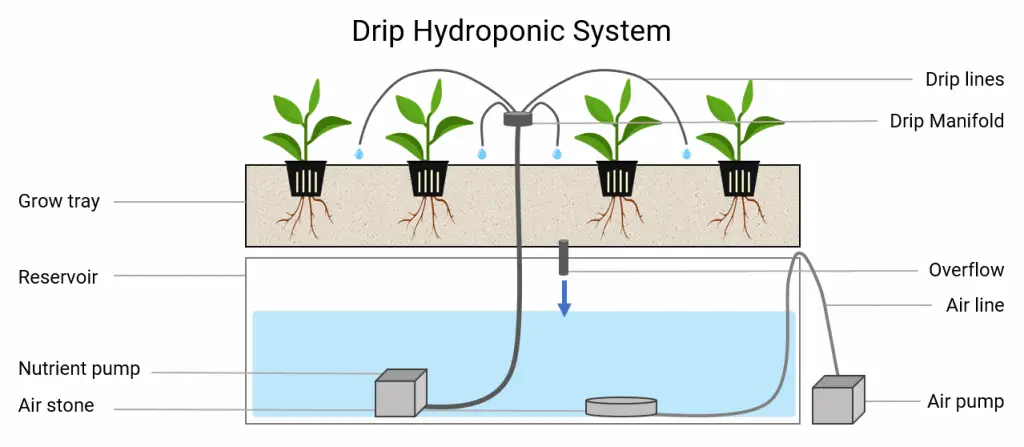
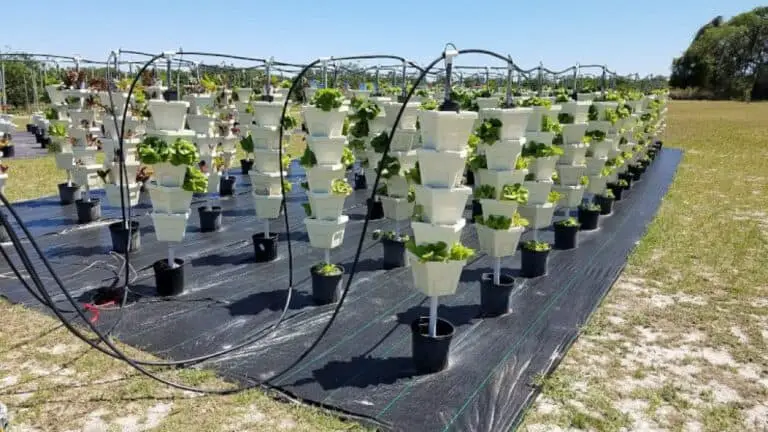
A drip hydroponic system involves the nutrient solution being pumped through a tube above the plants which drips the solution down onto the plant and roots. The drip system is great for closely monitoring the drip amount to each plant. However, with more drippers, more can go wrong. These systems can be prone to clogs.
Drip systems can either be circulating, where the solution returns to the basin, or non-circulating. Non-circulating means the nutrient-rich solution is single-use only and does not get recycled back into the system.
[4] Aeroponics
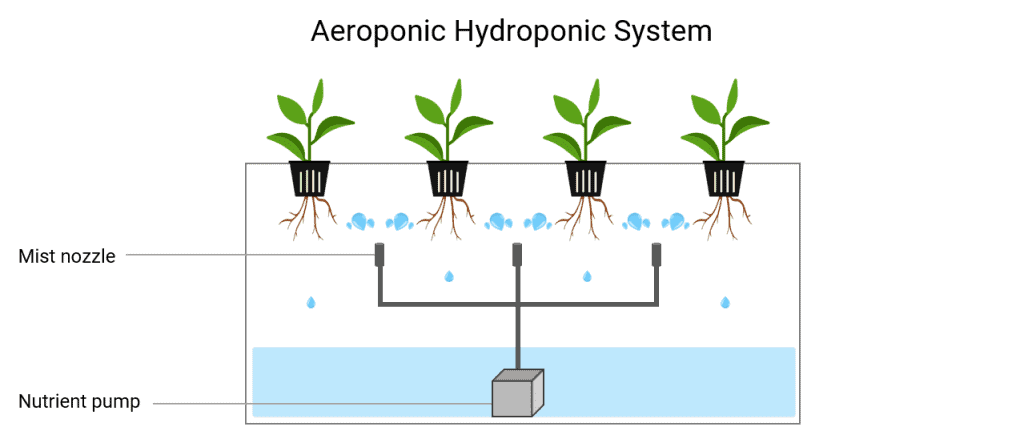
Aeroponics is a system where the plant roots are suspended and sprayed with nutrient-rich water. The nutrient spray effect is achieved using an aerosol or misting spray.
Aeroponics uses even less water than a traditional hydroponic system. Since the roots are suspended in air, they are able to absorb even more oxygen. Mister nozzles can spray the nutrient water continuously or intermittently.
If you’re looking to try out Aeroponics on your own, AeroGarden makes some really cool starter kits that are worth checking out.
[5] Ebb and flow
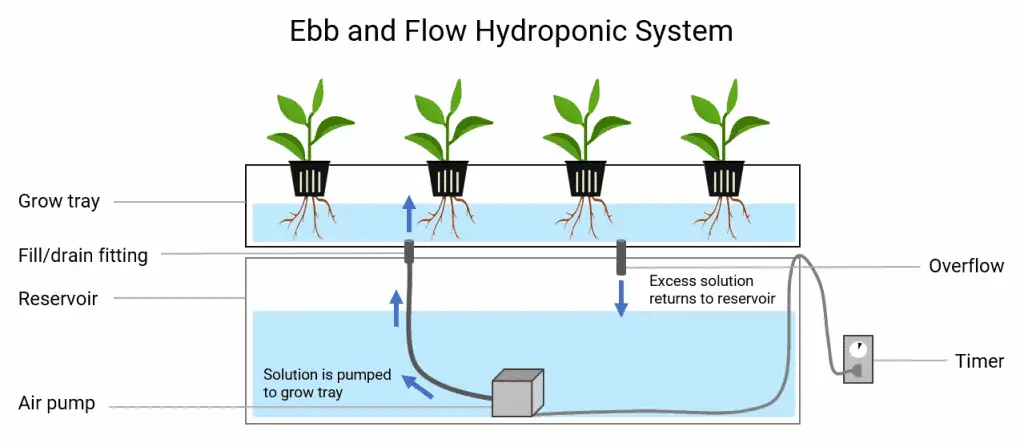
An ebb and flow system is also known as flood and drain, and is another great method to consider. This system involves a flooding reservoir that your plants sit in and is positioned above the nutrient reservoir water. The top tray with the plants gets flooded with the nutrient solution and then, in a specific interval, drains back down to the lower reservoir.
You can change the interval of the flooding by using a timer with your ebb and flow system. Ebb and flow hydroponics system for specific plants that flourish under these conditions of excess nutrients followed by a period of dryness. During the dry intervals, the plant roots will expand in search of more nutrients which causes faster growth overall.
[6] Nutrient film technique (NFT)
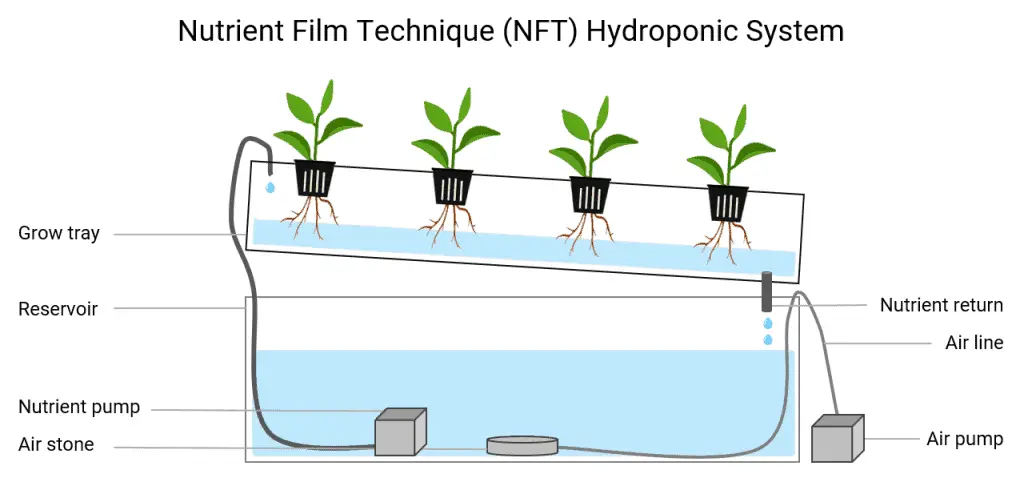
Nutrient Film Technique is a great option if you want to increase the oxygen levels and decrease the amount of water used. The key difference with NFT systems is that they rely on the plants to be suspended in a row at a slight tilt. This tilt allows for gravity to move the water through the tips of the roots.
NFT brings in the most oxygen because the roots are almost entirely exposed to the air and only the tips of the roots touch the nutrient solution.
Hybrid systems can be created using a combination of any of the above six methods. These are just the basic six; there are also other interesting subsets including aquaponics and fogponics that are worth exploring.

How Do I Choose the Right Hydroponic System?
When I compare hydroponic systems, I don’t simply ask which one grows plants fastest. I ask which system fits my space, schedule, budget, and experience.
Here’s the checklist I use.
Consider Your Experience
If you’re new to hydroponics, start simple.
Good beginner choices:
- Kratky
- Wick systems
- Deep Water Culture
Once you understand nutrients, pH, water levels, and root health, you can move toward more complicated systems.
Consider the Plants You Want to Grow
The crop often determines the system.
| Plants | Suitable Systems |
| Lettuce | DWC, NFT, Kratky, Ebb and Flow |
| Basil | DWC, NFT, Drip |
| Strawberries | NFT, Drip, Ebb and Flow |
| Tomatoes | Drip, Ebb and Flow |
| Peppers | Drip, Ebb and Flow |
| Cucumbers | Drip, Ebb and Flow |
| Small herbs | Wick, DWC, NFT, Kratky |
Large fruiting plants generally need more root space and support than small leafy greens.
Think About Maintenance
This is one of the biggest lessons I’ve learned.
A hydroponic system might look beautifully automated, but automation doesn’t eliminate maintenance. Pumps need cleaning, reservoirs need monitoring, tubing can clog, and nutrient solutions need attention.
If I know I’ll be away for several days, I prefer a system with fewer components and fewer potential failure points.
Essential Hydroponic Maintenance
Regardless of the system you choose, plant care still matters.
I keep an eye on several basic measurements and conditions:
- pH: Keep it within a range suitable for the crops you’re growing.
- Nutrients: Follow the manufacturer’s mixing instructions rather than guessing.
- Water level: Make sure roots receive enough moisture without losing access to oxygen.
- Temperature: Avoid excessive heat in the root zone.
- Light: Give plants enough light for healthy photosynthesis.
- Cleanliness: Regularly clean reservoirs, tubing, pumps, and growing containers.
- Roots: Healthy roots generally look firm and clean rather than slimy or foul-smelling.
A little maintenance goes a long way. Hydroponics rewards consistency.
Which Hydroponic System Is Best for Beginners?
If I were starting from scratch today, I’d choose Kratky or Deep Water Culture.
Kratky wins for simplicity because it doesn’t require a pump. DWC offers a little more control and can support impressive growth while remaining relatively inexpensive.
For someone who wants to grow a few heads of lettuce on a kitchen counter, Kratky makes plenty of sense. For someone planning a larger indoor garden, DWC provides a natural stepping stone toward more advanced hydroponic systems.
The important thing is to start with a manageable project.
You don’t need a greenhouse full of equipment to learn the ropes.
Final Thoughts
Hydroponics may seem complicated when you first look at all the pipes, reservoirs, pumps, lights, and nutrient bottles. Once you understand the basic principles, however, the fog starts to lift.
Every system simply tries to solve the same problem: give plant roots reliable access to water, nutrients, and oxygen while providing the right environment for growth.
Some systems keep roots submerged. Others flood and drain them. Some deliver a thin film of nutrients, while others use drippers or mist.
For me, the best hydroponic system isn’t necessarily the most sophisticated one. It’s the system I can understand, maintain, and enjoy using.
If you’re a beginner, start small. Grow lettuce, basil, or another forgiving crop. Learn how your plants respond to light, nutrients, water, and temperature. Once you’ve got those fundamentals under your belt, you can expand your setup.
Hydroponic gardening doesn’t have to be a leap into the deep end. Start with one container, one plant, and one simple system. Before long, you may find that growing without soil feels less like a strange experiment and more like second nature.