Austrian Pine Care: How I Grow and Maintain Pinus nigra

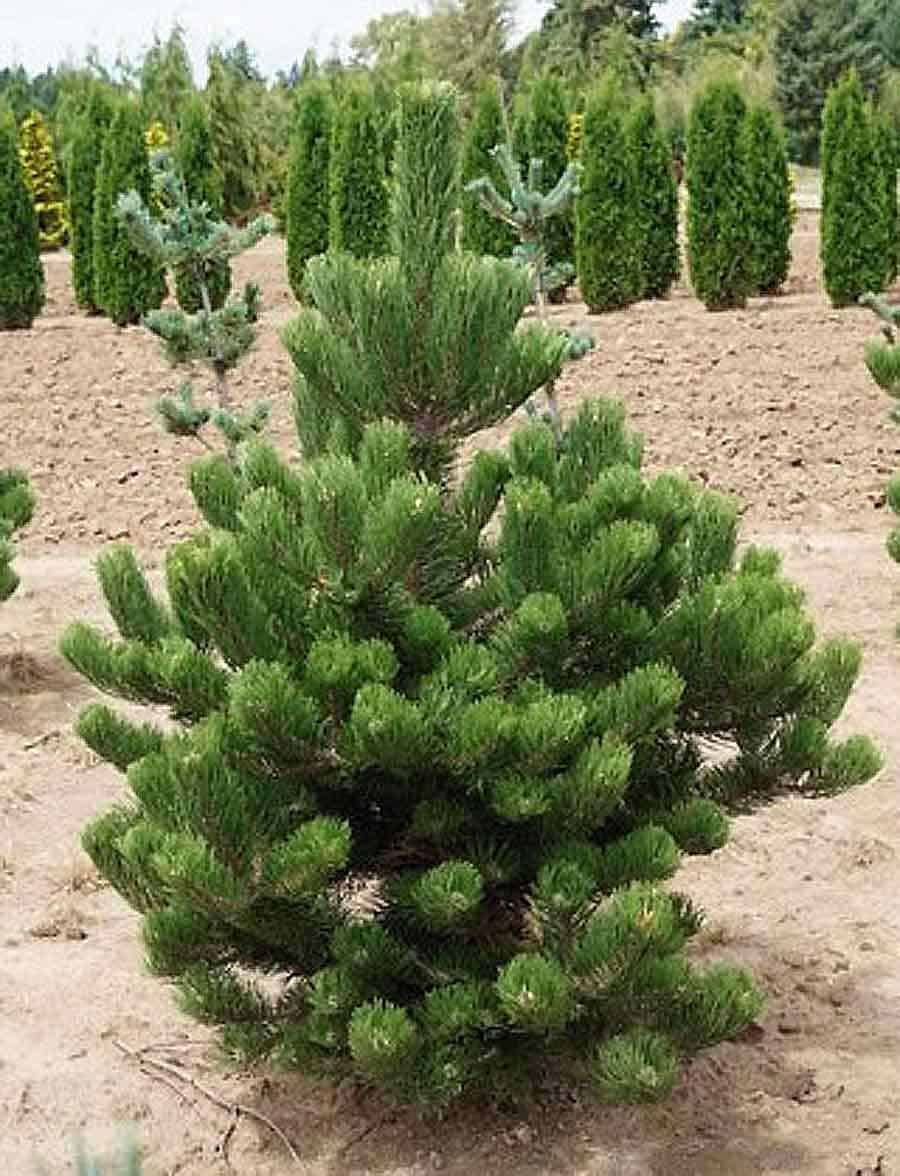
The Austrian Pine (Pinus nigra) is one of those trees that makes a statement without needing much fuss. Its dark green needles, sturdy branches, and rugged evergreen character give it a strong presence in the landscape. When I picture a classic pine, this is the sort of tree that comes to mind: tall, dependable, and built to handle its share of sun, wind, and winter weather.
I like Austrian Pine because it combines toughness with year-round beauty. It doesn’t disappear when autumn arrives, and it doesn’t leave the garden looking bare when winter rolls in. Instead, it keeps its deep green foliage and provides a solid backdrop for everything around it.
That said, this isn’t a tiny ornamental pine that I can squeeze into any spare corner. Pinus nigra can eventually become a substantial tree, so I think of planting one as making a long-term commitment. Give it the right site from the beginning, and it can become an anchor for the landscape for decades.
The good news? Austrian Pine care isn’t complicated. The recipe is fairly straightforward: sunshine, good drainage, sensible watering, and plenty of room to grow.
Austrian Pine Care at a Glance
| Care Requirement | What I Recommend |
| Botanical name | Pinus nigra |
| Common names | Austrian Pine, European Black Pine |
| Plant type | Evergreen conifer |
| Mature size | Commonly about 40–60 ft tall and 20–40 ft wide |
| Growth rate | Moderate to relatively fast when young |
| Light | Full sun |
| Soil | Well-drained loam, sandy, or clay soil |
| Water | Regularly while establishing; drought-tolerant once mature |
| Hardiness | Generally USDA Zones 4–8 |
| Foliage | Dark green needles |
| Needle length | Roughly 3–6 inches |
| Drought tolerance | Good once established |
| Salt tolerance | Relatively good |
| Best uses | Specimen tree, screen, windbreak, large landscape |
What Is an Austrian Pine?
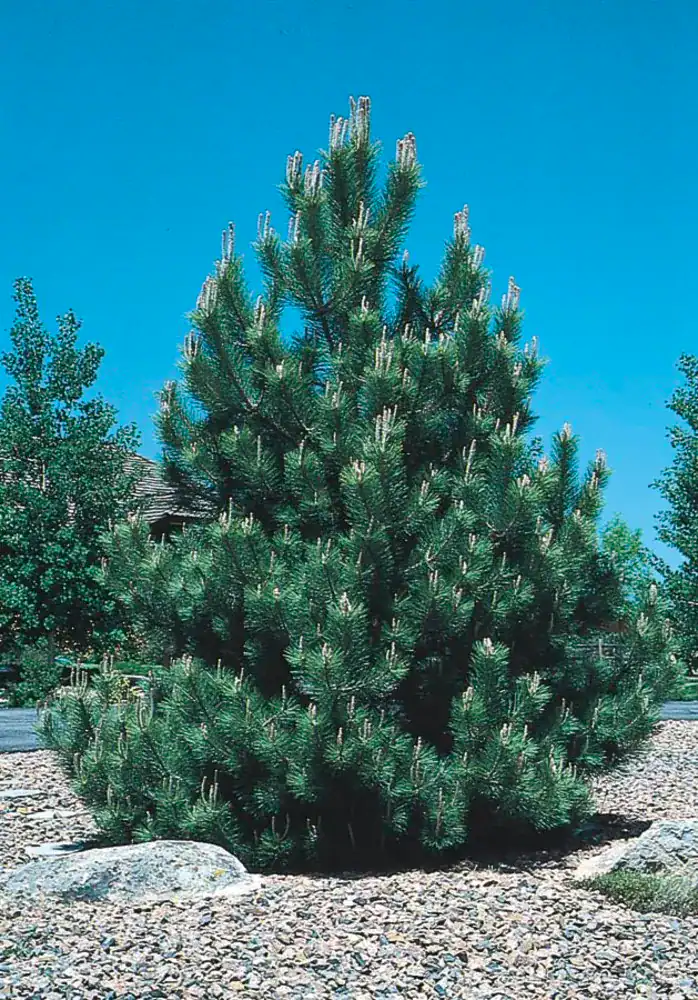
The Austrian Pine belongs to the Pinaceae, or pine family, and its botanical name is Pinus nigra. The species has a broad natural range across parts of southern and central Europe and into regions of the Mediterranean and western Asia.
You may also see names such as European Black Pine or Black Pine associated with Pinus nigra. Several geographic forms and subspecies exist, so individual trees can vary considerably in appearance and mature size.
Unlike compact cultivars such as Mugo Pine ‘Mops’, Austrian Pine grows into a genuine tree. That’s an important distinction I keep in mind when choosing a planting location.
Its long, dark green needles give the tree a dense appearance, while its rough, rugged bark adds character as it matures. The overall effect feels sturdy rather than delicate.
How Big Does Austrian Pine Get?
This is the part I wouldn’t overlook.
A mature Austrian Pine can commonly reach 40 to 60 feet tall and 20 to 40 feet wide, although size varies depending on the tree, growing conditions, and local climate.
It may look modest when you bring a young nursery tree home, but don’t let that little root ball fool you. Given enough time, it can become a serious landscape tree.
| Growth Feature | Typical Expectation |
| Mature height | 40–60 feet |
| Mature spread | 20–40 feet |
| Growth | Moderate to relatively fast when young |
| Form | Broad, upright, pyramidal to irregular with age |
| Long-term space | Large |
I avoid planting Austrian Pine directly beneath utility lines or right against a house. I also consider driveways, sidewalks, septic systems, neighboring trees, and overhead structures.
A small tree today can become a big headache tomorrow if I plant it in the wrong place.
Give it room, and the tree can stretch its limbs without becoming a constant pruning project.
Choosing the Right Growing Site
Austrian Pine appreciates an open, sunny location.
I look for a spot with:
- Full sun
- Good air circulation
- Well-drained soil
- Enough room for mature branches
- Protection from severe site limitations such as overhead wires
The tree generally performs well in a variety of soils, which contributes to its reputation as a tough landscape pine.
I don’t try to make the soil perfect. Instead, I make sure it doesn’t stay saturated for long periods.
That distinction matters.
Austrian Pine can tolerate periods of drought once established, but constantly waterlogged roots can create serious problems. Good drainage gives the roots room to breathe.

How Much Sun Does Austrian Pine Need?
When it comes to sunlight, I don’t split hairs.
Full sun is the goal.
I aim for at least six hours of direct sunlight per day, with more being even better when the site and climate allow it.
A sunny planting location encourages healthy growth and helps the tree maintain a strong, dense canopy. If I plant it in deep shade, I can’t expect it to perform like a tree growing in an open landscape.
Think of sunlight as the tree’s fuel tank. Give it plenty of fuel, and it has the energy to keep building.
| Check out: Why Pine Needles Make the Best Garden Mulch |
Watering Austrian Pine
Watering an Austrian Pine becomes much easier when I stop thinking in terms of a rigid weekly schedule.
Young trees need more attention than established trees. During the first few growing seasons after planting, I water deeply when the soil begins to dry. I pay especially close attention during hot weather or extended periods without rainfall.
Once the roots establish themselves, Austrian Pine becomes considerably more drought tolerant.
I use a simple soil check before reaching for the hose.
My soil test
I push my finger into the soil several inches away from the trunk.
- If the soil still feels reasonably moist, I wait.
- If the upper root zone feels dry, I water deeply.
- If the soil remains wet for an extended period, I hold off.
When I water, I prefer a slow, thorough soak over frequent little sips. Deep watering encourages roots to explore the surrounding soil instead of remaining concentrated right beneath the surface.
I also avoid keeping the trunk constantly wet. Water the root zone rather than turning the base of the tree into a puddle.
Soil Requirements
Austrian Pine adapts to a surprisingly broad range of soils.
Loam, sandy soil, and even heavier clay can work if the site drains reasonably well. I focus less on creating a complicated soil recipe and more on avoiding poor drainage.
| Soil Type | My Approach |
| Loam | Excellent choice |
| Sandy soil | Usually good drainage; add organic matter if needed |
| Clay | Can work if drainage improves |
| Gravelly soil | Suitable if it retains enough moisture |
| Constantly wet soil | Avoid |
The original care information suggests mixing clay, loam, chalk, and sand together. I wouldn’t treat that as a strict recipe. A mature Austrian Pine doesn’t need a gourmet soil blend.
It needs stable roots, adequate nutrients, and drainage.
A soil pH ranging from somewhat acidic through neutral and mildly alkaline can generally work, which gives this pine plenty of flexibility.
| Read on: Miscanthus Sinensis ‘Strictus’ (Porcupine Grass) Care and Growing Guide |
Foliage and Evergreen Interest
The foliage is one of the main reasons I like Austrian Pine.
Its needles typically grow in pairs and can reach around 3 to 6 inches long. They carry a rich dark green color that remains attractive throughout the year.
Unlike deciduous trees, Austrian Pine doesn’t drop all its foliage when the seasons change. That evergreen character gives me a dependable visual anchor in the garden.
In summer, the dark needles provide a strong backdrop for flowering plants. In winter, they keep the landscape from looking like an empty stage.
The bark also becomes more interesting with age, adding texture and visual weight to the trunk and larger branches.
Does Austrian Pine Flower?
Technically, yes—but I wouldn’t plant it for flowers.
Like other conifers, Austrian Pine produces male and female reproductive structures rather than showy flowers. Male pollen cones appear seasonally, while female cones develop and eventually produce seeds.
The cones can become an attractive feature in their own right, but they don’t resemble the colorful blossoms we associate with flowering shrubs.
So when I say this tree provides year-round interest, I’m talking about its foliage, structure, bark, and cones rather than traditional flowers.
Drought, Deer, and Salt Tolerance
Austrian Pine has earned a reputation as a tough landscape tree for good reason.
Once established, it can tolerate periods of drought. That doesn’t mean I ignore it during extreme heat, especially if the tree is young, but mature specimens can handle dry conditions better than many ornamental trees.
It also shows useful salt tolerance, which can make it valuable in landscapes exposed to road salt or coastal conditions.
Deer generally don’t consider Austrian Pine a first-choice meal, although wildlife behavior varies from one location to another. No plant comes with a foolproof deer-proof guarantee.
Still, I appreciate having a tree that doesn’t constantly look like the local wildlife has used it as a buffet.
Where I Use Austrian Pine in the Landscape
Because this tree gets large, I think about its role before planting it.
Austrian Pine works particularly well as:
- A specimen tree
- A windbreak
- A large privacy screen
- A background tree
- A shelterbelt planting
- A coastal landscape tree
- A rustic or traditional garden feature
- A large-property landscape anchor
Its dark foliage can create a dramatic backdrop for plants with lighter leaves or colorful flowers.
I also like the way it looks in more naturalistic landscapes. It doesn’t have the manicured personality of a tightly clipped hedge. Instead, it brings that rugged, old-world pine character to the garden.
Companion Plants
When I choose companions for Austrian Pine, I look for plants that appreciate similar conditions rather than simply choosing plants because they look good together.
Acer species, including Japanese maples in suitable climates, can provide a beautiful contrast between fine foliage and pine needles. Holly (Ilex) can also work well where growing conditions overlap.
Other possibilities include:
| Companion Type | Why It Works |
| Japanese maple | Contrasts with the pine’s coarse texture |
| Holly (Ilex) | Adds glossy evergreen foliage |
| Ornamental grasses | Introduces movement and softness |
| Junipers | Reinforces the evergreen structure |
| Drought-tolerant perennials | Complement mature pine’s dry-soil tolerance |
I don’t plant companions too close to the trunk. The tree needs room for its roots, branches, and airflow, and competing vegetation can make maintenance harder.
Seasonal Austrian Pine Care
Austrian Pine doesn’t require a complicated seasonal checklist.
Spring: I inspect the tree for winter damage and watch for new growth. This is also a good time to remove dead or broken branches.
Summer: I monitor young trees closely during drought and extreme heat. Established trees usually need much less supplemental water.
Fall: I check the soil moisture before winter and keep the root zone reasonably clear of excessive debris.
Winter: I mostly leave the tree alone. Its evergreen foliage provides structure when much of the garden goes dormant.
This low-maintenance rhythm is one of the tree’s biggest attractions.
My Final Thoughts on Austrian Pine
Austrian Pine isn’t a plant I choose when I want instant gratification. I choose it when I want a tree that can become part of the landscape for the long haul.
Its dark green needles, rugged bark, drought tolerance, adaptability, and evergreen habit make it a dependable landscape performer. But I never forget its eventual size.
If I had to reduce Austrian Pine care to a few simple rules, I’d stick with these:
- Plant it in full sun.
- Give it well-drained soil.
- Water young trees deeply and consistently while they establish.
- Let established trees dry somewhat between thorough waterings.
- Give the tree plenty of room to reach its mature size.
- Avoid unnecessary pruning and let its natural form develop.
Get those basics right, and Austrian Pine doesn’t ask for much in return.
It simply stands there, season after season, doing what a good landscape tree should do: putting down roots, holding the garden together, and quietly becoming more impressive with every passing year.