Golden Bamboo Care: How I Grow and Manage Phyllostachys aurea

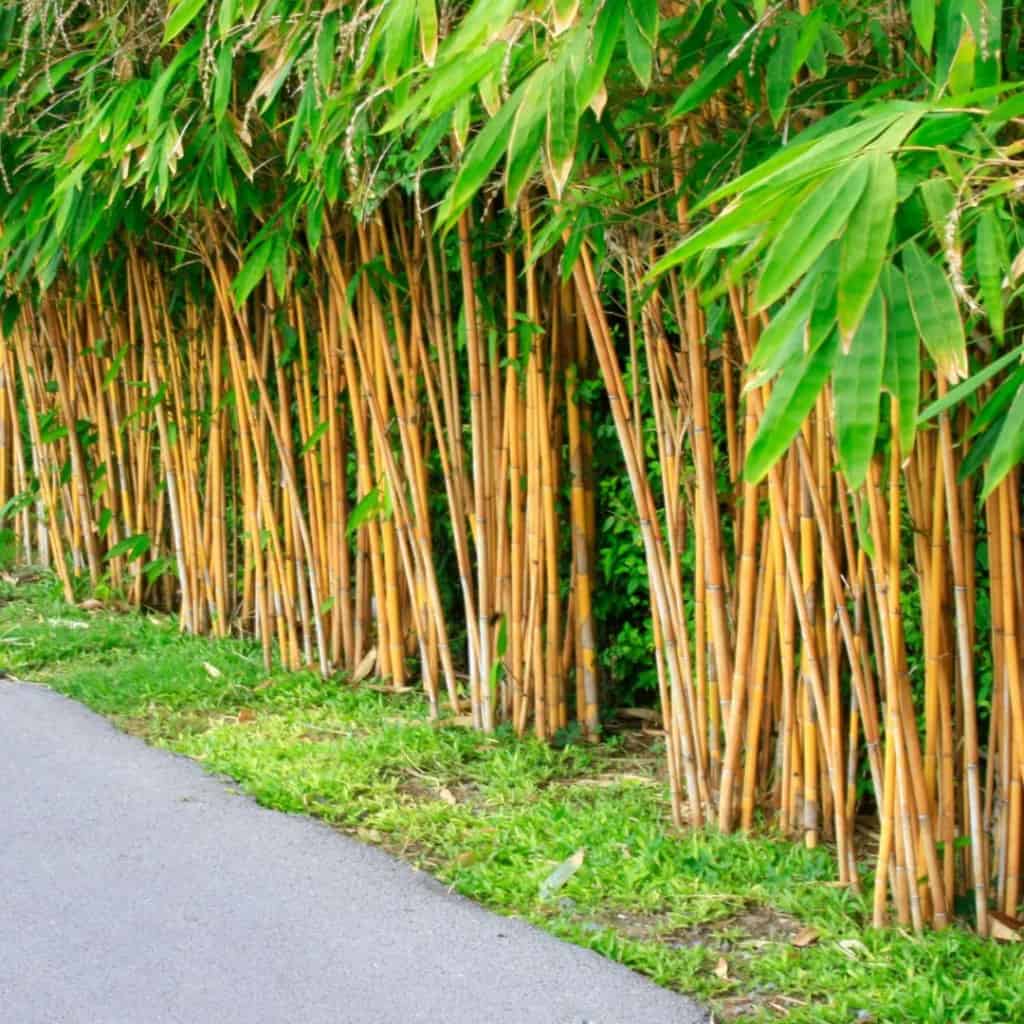
Golden Bamboo (Phyllostachys aurea) is one of those plants that can completely change the character of a garden. Give it a sunny corner, enough moisture, and room to spread, and it quickly turns into a living wall of green and golden canes.
I especially like Golden Bamboo when I want privacy without building a fence. Its tall, upright stems create a natural screen, while the narrow green leaves give the garden movement and texture. The catch? This bamboo grows vigorously, and because it spreads through underground rhizomes, I never plant it without thinking about where I want it to go.
Golden Bamboo also goes by several common names, including Fish-Pole Bamboo, Yellow Bamboo, and Golden Bamboo. Despite its tropical-looking appearance, it can tolerate surprisingly cold conditions when established.
Here is how I approach Phyllostachys aurea care, from watering and soil to sunlight, pruning, and garden placement.
Getting to Know Golden Bamboo
Golden Bamboo belongs to the grass family, Poaceae, which may sound surprising if you usually think of grasses as short lawn plants. Bamboo proves that grass can have a very different card up its sleeve.
Its botanical name is Phyllostachys aurea. The genus Phyllostachys includes many running bamboos known for their woody culms and vigorous growth.
Unlike many deciduous shrubs and trees, Golden Bamboo keeps its foliage throughout much of the year in suitable climates. That evergreen character makes it particularly useful when I want screening and structure that doesn’t disappear when winter arrives.
Golden Bamboo at a glance
| Feature | Golden Bamboo |
| Botanical name | Phyllostachys aurea |
| Common names | Golden Bamboo, Fish-Pole Bamboo, Yellow Bamboo |
| Family | Poaceae |
| Plant type | Evergreen running bamboo |
| Growth rate | Fast |
| Mature habit | Upright, spreading |
| Light | Partial shade to full sun |
| Soil | Moist, fertile, well-drained |
| Water | Regular during establishment and dry periods |
| Main garden use | Privacy screens, hedges, barriers, containers |
| Special consideration | Vigorous rhizomatous spread |
Where Golden Bamboo Comes From
Phyllostachys aurea originates in China and has become widely cultivated in many parts of the world.
I find a plant’s native background useful because it gives me a starting point for understanding what it likes. Golden Bamboo naturally grows in conditions where it can take advantage of warmth, sunlight, moisture, and fertile ground.
In the garden, however, I don’t try to recreate its native habitat perfectly. Instead, I focus on the basics: good drainage, adequate water, plenty of light, and enough space.
Golden Bamboo can tolerate a broad range of conditions, and established plants can handle colder temperatures than their appearance might suggest. In colder areas, the foliage may suffer during severe weather, but the underground rhizomes can survive and send up new growth when conditions improve.
How Fast Does Golden Bamboo Grow?
This is where I always tell new growers to think ahead.
Golden Bamboo is a fast-growing running bamboo. That makes it fantastic when I want a screen quickly, but it also means I can’t treat it like a slow-growing ornamental shrub.
Under favorable conditions, mature culms can reach roughly 15 to 25 feet tall, sometimes more depending on climate, soil, water, and growing conditions. The plant can also spread considerably through underground rhizomes.
That combination of height and spread gives Golden Bamboo its charm—and its reputation.
If you plant it in an open area where spreading doesn’t matter, its vigorous nature can work in your favor. If you plant it beside a driveway, foundation, fence, or neighboring property, however, you’ll want a management plan.
My rule for planting running bamboo
Before putting Golden Bamboo in the ground, I ask myself:
- Where can the rhizomes travel?
- How tall do I want the screen to become?
- Can I install a rhizome barrier?
- Will neighboring plants have enough room?
- How will I remove unwanted shoots later?
A little planning at the beginning can save a mountain of work later.
Watering Golden Bamboo
When I first think about bamboo, I tend to picture a plant that can survive on rain alone. Golden Bamboo can certainly become fairly resilient once established, but newly planted bamboo needs more attention.
I keep the soil consistently moist during the establishment period, particularly during hot or dry weather. Once the plant develops a strong root and rhizome system, I gradually reduce supplemental watering.
The goal isn’t soggy soil. Bamboo likes moisture, but constantly waterlogged roots can create their own problems.
How I check the soil
I use the simplest moisture meter in the garden: my finger.
I push a finger into the top few inches of soil and check how it feels.
- Dry soil: Give the bamboo a thorough watering.
- Slightly moist soil: I usually wait and check again later.
- Wet or soggy soil: I hold off watering and check drainage.
During hot summer weather, I pay particular attention to newly planted bamboo. Mulching around the plant also helps slow evaporation and keeps the root zone more stable.
Choosing the Right Soil
Golden Bamboo isn’t especially fussy about soil, but I always aim for a mix that holds moisture without becoming a swamp.
A fertile loam soil works particularly well. Good garden soil should allow excess water to drain while retaining enough moisture for the roots and rhizomes.
If my native soil contains heavy clay, I improve the planting area with organic matter and work on drainage rather than simply adding more water later. If the soil drains too quickly, adding compost can help improve its ability to retain moisture.
My ideal soil checklist
| Soil characteristic | Why it matters |
| Well-drained | Prevents prolonged waterlogging |
| Moisture-retentive | Helps during hot, dry periods |
| Fertile | Supports vigorous growth |
| Rich in organic matter | Improves soil structure |
| Slightly acidic to neutral | Suitable for general healthy growth |
I don’t obsess over getting the soil pH to one exact number. Good structure, drainage, fertility, and moisture matter more in my everyday care routine.
How Much Sun Does Golden Bamboo Need?

Golden Bamboo grows well in partial shade to full sun.
I generally prefer a location with plenty of light because strong sunlight encourages vigorous growth and helps produce a dense screen. However, the plant can also tolerate some shade.
If I plant it in a spot with only a few hours of direct sunlight, I expect slower growth and a potentially less dense appearance. A brighter location usually gives me more of the tall, leafy screen that makes this bamboo so useful.
In very hot climates, some afternoon protection can also help reduce stress, particularly for newly planted specimens.
| Related: Heavenly Bamboo (Nandina Domestica): Plant Care and Growing Guide |
Golden Bamboo Through the Seasons
One reason I enjoy Golden Bamboo is its ability to provide garden structure for much of the year.
Spring brings fresh growth, while summer often produces the strongest flush of vigorous shoots. In autumn, the foliage continues to provide screening, and established plants can retain their leaves through winter in suitable climates.
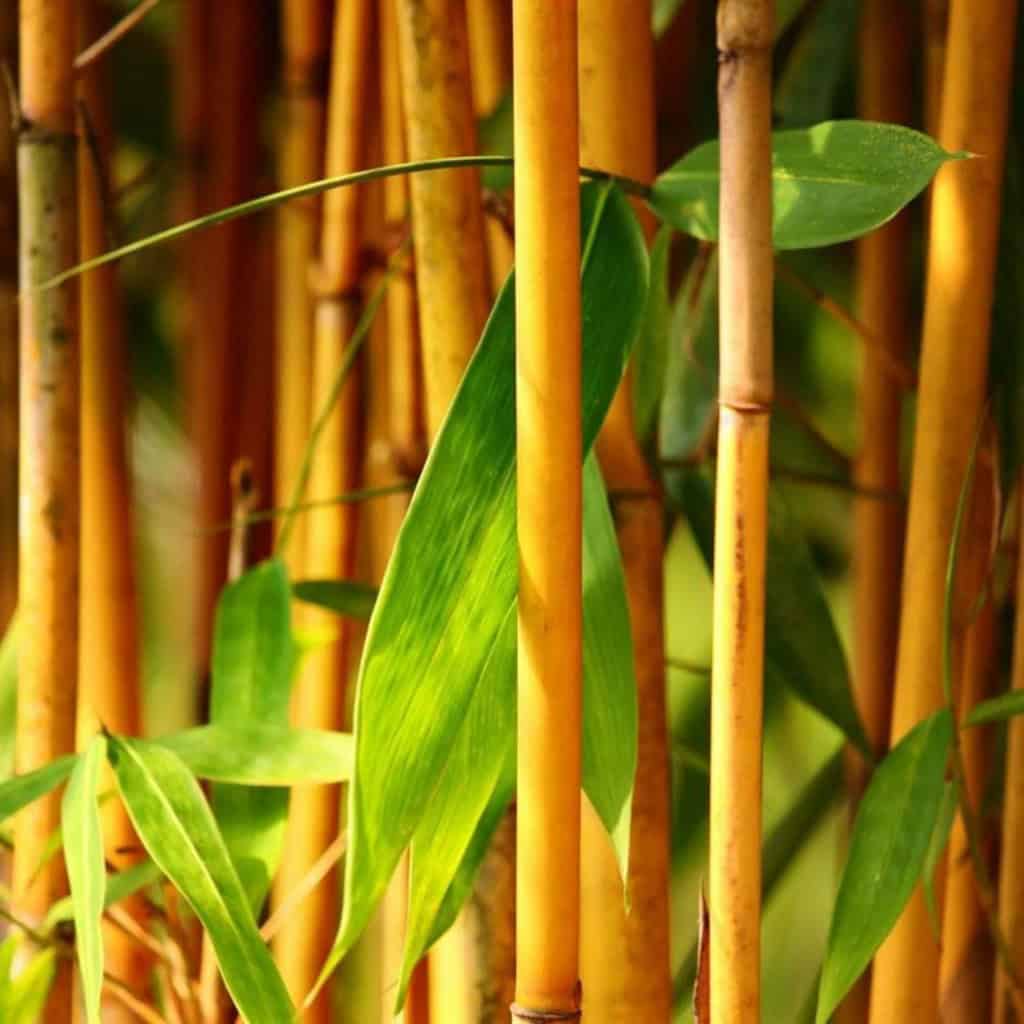
The golden coloration of mature culms can become particularly attractive as the stems age and develop their characteristic yellow-green appearance.
It gives the garden a backbone when many other plants start dropping their leaves.
The Foliage and Canes
The leaves are narrow, green, and relatively delicate compared with the thick woody culms. They create a soft contrast against the upright stems, which gives Golden Bamboo both architectural structure and a leafy appearance.
The culms can become yellowish or golden, especially as they mature and receive plenty of sunlight. This contrast between green foliage and golden stems is one of the plant’s biggest ornamental attractions.
For me, the plant works almost like a natural curtain: the stems provide the framework while the leaves fill in the gaps.
Does Golden Bamboo Attract Deer?
Golden Bamboo generally receives little browsing pressure from deer compared with many garden favorites. However, I never describe any plant as completely deer-proof.
Hungry wildlife can behave unpredictably, especially when food becomes scarce.
If deer are common in your area, I still monitor newly planted bamboo until it becomes established. Fortunately, its vigorous growth gives it a good chance of recovering from minor browsing.
Using Golden Bamboo in the Garden
This is where Phyllostachys aurea really earns its keep.
I like using Golden Bamboo as a:
- Privacy screen
- Living hedge
- Windbreak
- Visual barrier
- Garden backdrop
- Erosion-control planting
- Container specimen
- Architectural feature in contemporary gardens
Its tall, vertical growth works particularly well in Asian-inspired, Zen, tropical, and contemporary landscapes.
I also like pairing bamboo with plants that have contrasting shapes. Bamboo provides vertical lines, while broad-leaved shrubs and Japanese maples can soften the composition.
Growing Golden Bamboo in Containers
If I want the appearance of Golden Bamboo but don’t want unrestricted rhizome spread, container growing becomes an attractive option.
A large, sturdy container can limit the plant’s growing area and make it easier to position on a patio or terrace. However, container-grown bamboo still needs regular watering because pots dry out much faster than garden soil.
I also avoid tiny decorative pots. Golden Bamboo is vigorous, so I give it a substantial container with good drainage and refresh the growing medium for bamboo when necessary.
Container growing doesn’t eliminate maintenance, but it gives me much more control.
Companion Plants for Golden Bamboo
I prefer companions that complement bamboo rather than compete with its visual impact.
Japanese maple
Japanese maple provides an excellent contrast. The delicate foliage and branching structure of a maple can soften the straight vertical lines of bamboo.
Azaleas
Azaleas also work beautifully around bamboo. Their flowers add seasonal color while the bamboo supplies a steady green backdrop.
Other possible companions include shade-tolerant perennials, ferns, hostas, and ornamental grasses, depending on the amount of sunlight and moisture available.
| Check out: How to Grow U-Cut Bamboo for Profit |
Managing a Vigorous Bamboo
This is the part I never skip.
Because Golden Bamboo spreads through rhizomes, I think about containment before planting. If I want a permanent in-ground screen, I consider installing a suitable rhizome barrier and regularly checking for escaping shoots.
I also inspect the edges of the planting area each season. A few minutes of monitoring can prevent a small escape from becoming a full-blown garden project.
Pruning old or unwanted culms also keeps the planting looking tidy. I cut unwanted stems close to ground level rather than allowing a crowded clump to become difficult to manage.
The trick with running bamboo is simple: enjoy its energy without letting that energy run the show.
Final Thoughts
Golden Bamboo is a striking, fast-growing plant that can bring privacy, movement, and year-round structure to the garden. I love it most when I have a clear purpose for it—creating a screen, softening a boundary, blocking wind, or adding strong vertical lines to the landscape.
Its basic care isn’t complicated. Give it adequate sunlight, maintain consistent moisture while it establishes, provide fertile and well-drained soil, and keep an eye on its rhizomes.
The biggest lesson I’ve learned with Phyllostachys aurea is that planning matters just as much as watering. This isn’t a plant that politely waits in its corner. Give it an inch, and it may take a mile.
With the right location and sensible containment, though, Golden Bamboo can become one of the most useful and eye-catching plants in the garden.
This version keeps the practical care information but makes the article more personal, cohesive, and useful for a gardener planning to grow Phyllostachys aurea.