Golden Japanese Forest Grass Care: How I Grow Hakonechloa macra ‘Aureola’

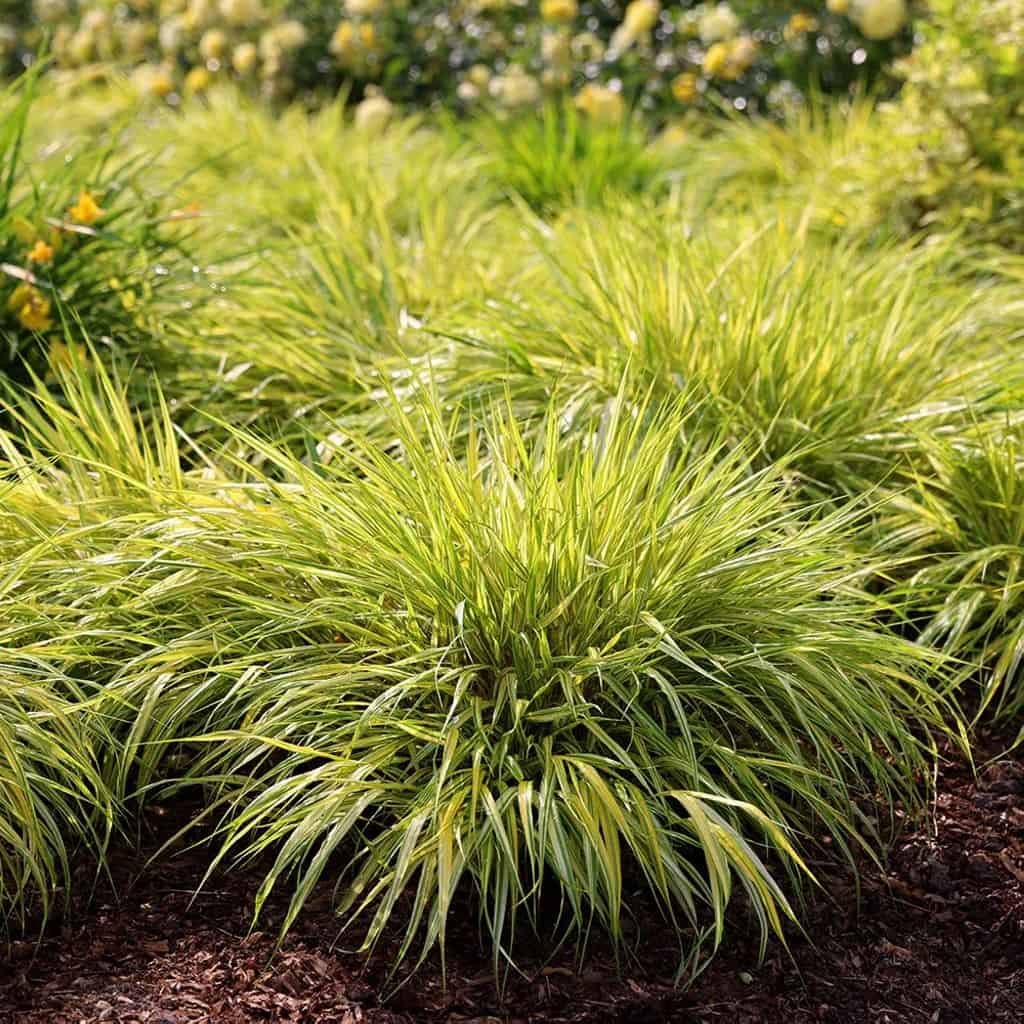
Golden Japanese Forest Grass (Hakonechloa macra ‘Aureola’) is one of those plants that quietly steals the show. It doesn’t need towering flower spikes or enormous leaves to make an impression. Instead, it forms a graceful mound of arching golden-yellow foliage that seems to spill across the garden like a little waterfall.
I especially love this ornamental grass in shady parts of the garden where many sun-loving plants struggle. The bright foliage acts like a splash of sunshine in a darker corner, and its slow, controlled growth makes it much easier to manage than many vigorous ornamental grasses.
If you’re looking for an attractive ground cover, edging plant, woodland companion, or container specimen, Hakonechloa macra ‘Aureola’ is worth a place on the shortlist.
The secret to keeping it happy isn’t complicated. I focus on three things: moisture, shade, and well-drained soil. Get those right, and this Japanese forest grass rewards you with a beautiful, flowing mound year after year.
Getting to Know Golden Japanese Forest Grass
Golden Japanese Forest Grass belongs to the Poaceae, or grass, family. Its botanical name is Hakonechloa macra ‘Aureola’, and gardeners commonly call it Golden Hakone Grass, Hakone Grass ‘Aureola’, or simply Golden Japanese Forest Grass.
Unlike evergreen grasses that hold their foliage throughout winter, this one is herbaceous. That means the foliage eventually dies back as temperatures drop, leaving the plant dormant underground. When spring arrives, new shoots emerge and the cycle begins again.
For me, that seasonal rhythm adds character rather than taking anything away from the plant. I get a fresh flush of growth each spring, a lush mound through summer, and warm seasonal color before the foliage retreats for winter.
Golden Japanese Forest Grass at a glance
| Feature | Details |
| Botanical name | Hakonechloa macra ‘Aureola’ |
| Common names | Golden Japanese Forest Grass, Golden Hakone Grass, Hakone Grass ‘Aureola’ |
| Family | Poaceae |
| Plant type | Herbaceous ornamental grass |
| Growth rate | Slow to moderate |
| Mature size | About 1–2 ft tall and wide |
| Light | Partial shade to dappled light |
| Soil | Moist, fertile, well-drained |
| Water | Regular moisture, especially when young |
| Main uses | Borders, edging, containers, ground cover, woodland gardens |
| Foliage | Golden-yellow to yellow-green |
Where Golden Japanese Forest Grass Comes From
Hakonechloa macra originates in Japan, particularly in mountainous and woodland environments.
That background gives me an important clue about how to grow it. This isn’t a prairie grass that wants to bake in the afternoon sun. It naturally fits the cooler, sheltered side of gardening.
When I choose a location for it, I think about the forest floor: filtered light, moisture-retentive soil, organic matter, and protection from harsh conditions.
In other words, I don’t try to make Golden Japanese Forest Grass toughen up. I give it the conditions it already knows and loves.
It generally performs well in USDA hardiness zones around 5–9, although local conditions, cultivar performance, winter exposure, and microclimate can all affect results.
How Big Does Golden Japanese Forest Grass Get?
One of the reasons I find this grass so easy to work with is its manageable size.
A mature clump typically reaches around 1 to 2 feet tall and wide. Instead of shooting skyward, it gradually forms a rounded, cascading mound.
I usually give each plant about 18–24 inches of space so the foliage can spread naturally without immediately crowding its neighbors.
This compact habit makes it useful when I want to fill the front of a border without blocking plants behind it.
Where I like to use it
Golden Japanese Forest Grass works beautifully as:
- A woodland ground cover
- Border edging
- A front-of-border accent
- A container plant
- A mass planting
- A pathway edging plant
- A rock-garden companion
- A shady garden feature
- A Japanese-style garden plant
Its arching habit is particularly attractive beside paths because the foliage seems to lean toward the walkway.
Watering Golden Japanese Forest Grass
Watering is probably the most important part of my Golden Japanese Forest Grass routine.
This grass likes consistently moist soil, especially during its first growing seasons. I don’t allow newly planted clumps to dry out for long periods because young roots need reliable moisture while they establish.
Once the plant settles in, it becomes easier to manage. I still water during extended dry periods, but I don’t keep the soil saturated.
The sweet spot is simple: moist, but not soggy.
My finger-test method
I don’t rely on a rigid watering calendar because weather changes everything. Instead, I check the soil.
I push my finger into the soil near the plant and feel the moisture.
- If the upper soil feels dry, I water thoroughly.
- If it still feels comfortably moist, I wait.
- If the soil feels saturated, I let it dry slightly before watering again.
This little trick saves me from both extremes—letting the grass wilt from drought or drowning its roots with unnecessary water.
During hot weather, container-grown plants need special attention because pots lose moisture much faster than garden beds.
Choosing the Right Soil

Golden Japanese Forest Grass isn’t demanding about soil type, but it performs best when the soil combines moisture retention with good drainage.
I like to work plenty of organic matter into poor soil before planting. Compost can improve structure, increase moisture retention, and provide a healthier environment for roots.
Heavy clay can hold too much water, while extremely sandy soil may dry out too quickly. Organic matter helps bring the two extremes closer together.
My ideal soil mix
| Soil quality | Why I want it |
| Moisture-retentive | Keeps roots hydrated |
| Well-drained | Prevents prolonged saturation |
| Rich in organic matter | Supports healthy root growth |
| Fertile | Encourages lush foliage |
| Loose and crumbly | Makes root development easier |
I don’t chase a perfectly engineered soil recipe. I focus on soil that feels rich, drains reasonably well, and doesn’t turn into either concrete or soup.
How Much Sun Does It Need?
This is where Golden Japanese Forest Grass differs from many ornamental grasses.
It prefers partial shade and filtered light rather than intense, all-day sun.
I get the best color when I place it somewhere with morning sun, dappled light, or bright shade. A location beneath the open canopy of a tree can work beautifully.
Too much intense afternoon sunlight can scorch the foliage, especially in hot climates. On the other hand, very deep shade may reduce the plant’s golden coloration and make the mound less vigorous.
The lighting sweet spot
I look for:
- Morning sunlight
- Dappled shade
- Bright woodland conditions
- Partial shade
- Protection from intense afternoon heat
Think of it as a woodland plant wearing a golden coat. It wants light, but it doesn’t want to stand under a blazing spotlight all afternoon.
The Golden Foliage
The foliage is the real star of the show.
The slender leaves develop shades of golden yellow, yellow-green, and green, often creating a striped or variegated appearance. When sunlight filters through the leaves, the entire clump can seem to glow.
I especially appreciate this quality in shady beds. Dark green shrubs and woodland perennials can sometimes make a corner feel heavy. Golden Japanese Forest Grass breaks up that darkness and adds visual lift.
Its cascading habit also gives the garden movement. Rather than standing stiffly upright, the leaves arch outward and downward.
Flowers and Seasonal Interest
Golden Japanese Forest Grass doesn’t rely on flowers for its ornamental value. Its foliage does most of the heavy lifting.
It can produce small, relatively inconspicuous flower clusters in summer and into the later growing season. They’re interesting when you notice them, but I wouldn’t plant this grass specifically for its flowers.
The real seasonal show comes from the foliage.
My seasonal expectations
| Season | What I usually see |
| Spring | Fresh shoots emerge from dormancy |
| Summer | Full, lush golden foliage |
| Fall | Foliage develops warmer tones before dying back |
| Winter | Plant becomes dormant and retreats to ground level |
When the foliage finally dies back, I cut the old growth down in late winter or early spring before new shoots emerge.
That simple cleanup gives the new growth a clean stage to step onto.
Is Golden Japanese Forest Grass Deer Resistant?
This ornamental grass generally experiences less deer browsing than many flowering garden plants, although I never consider any plant completely deer-proof.
Hungry deer can become equal-opportunity gardeners.
If deer regularly visit your garden, I keep an eye on new plantings, particularly during periods when other food sources become scarce. Once established, Golden Japanese Forest Grass usually makes a reliable low-maintenance addition to the landscape.
Using It in the Garden
This is where I think Golden Japanese Forest Grass really shines.
Its compact size and flowing habit make it useful in both formal and relaxed landscapes. I particularly like it in Japanese, woodland, cottage, rustic, and contemporary gardens.
I often use it along pathways because the foliage softens hard edges. It also works beautifully beneath taller shrubs and trees, where its golden color brightens the ground layer.
For a larger visual impact, I can plant several clumps together. Mass planting creates a golden carpet that looks far more dramatic than a single specimen.
My favorite garden placements
- Beneath deciduous trees
- Along shaded pathways
- At the front of borders
- Around patios
- Beside rocks and stone paths
- In woodland gardens
- Around water features
- In decorative containers
Growing Golden Japanese Forest Grass in Containers
Containers are another reason I recommend this grass.
Its relatively compact growth makes it a natural fit for patios, balconies, entryways, and small gardens. I choose a container with drainage holes and use a quality potting mix that holds moisture without becoming waterlogged.
The main challenge comes down to watering. Container soil dries out faster than garden soil, particularly during hot weather.
I check the pot more frequently and water whenever the growing medium begins to dry.
Companion Plants I Like
Golden foliage gives me plenty of opportunities to play with color and texture.
Japanese maple
A Japanese maple makes a wonderful companion because its branching structure rises above the low mound of grass. The combination creates a layered woodland effect.
Bigleaf hydrangea
Hydrangea macrophylla also pairs nicely with Golden Japanese Forest Grass. The large hydrangea leaves and flowers contrast beautifully with the fine texture of the grass.
I also like combining it with ferns, hostas, heucheras, astilbes, and other shade-loving plants.
The key is contrast. I want the grass to act as the golden thread that ties the planting together.
My Simple Care Routine
Once established, Golden Japanese Forest Grass doesn’t demand much from me.
My routine looks something like this:
- Check soil moisture regularly, especially during hot weather.
- Water deeply when the soil begins to dry.
- Maintain a layer of organic mulch around the plant without piling it against the crown.
- Remove dead foliage in late winter or early spring.
- Divide overcrowded clumps in spring if necessary.
- Watch for excessive sun exposure if the leaves begin to scorch.
- Give container plants extra attention because their soil dries quickly.
I don’t fuss over it every day. Once I put it in the right place, the plant does most of the work.
Final Thoughts
Golden Japanese Forest Grass (Hakonechloa macra ‘Aureola’) has earned a permanent spot on my list of favorite shade-loving ornamentals.
It grows slowly, stays relatively compact, and brings a bright golden glow to places where many plants struggle. Its graceful foliage softens paths, fills woodland beds, dresses up containers, and creates a beautiful transition between taller plants and the ground.
The formula is straightforward: give it partial shade, keep the soil consistently moist but well-drained, and enrich the soil with organic matter.
After that, patience does the rest.
This isn’t a plant that shouts for attention. It whispers—and somehow, that makes you look twice. Once a mature clump starts cascading through the garden like a golden-green waterfall, it’s easy to see why Hakonechloa macra ‘Aureola’ remains such a popular choice for shaded landscapes.